EN
- VN
- FR
- ZH
Hanoi is a city of rich historical layers, where the dynamism of modern life converges with ancient traditions. Nestled quietly in the heart of this bustling capital stands the Temple of Literature Hanoi (Văn Miếu – Quốc Tử Giám), an essential destination that symbolizes over a millennium of Vietnamese reverence for learning.
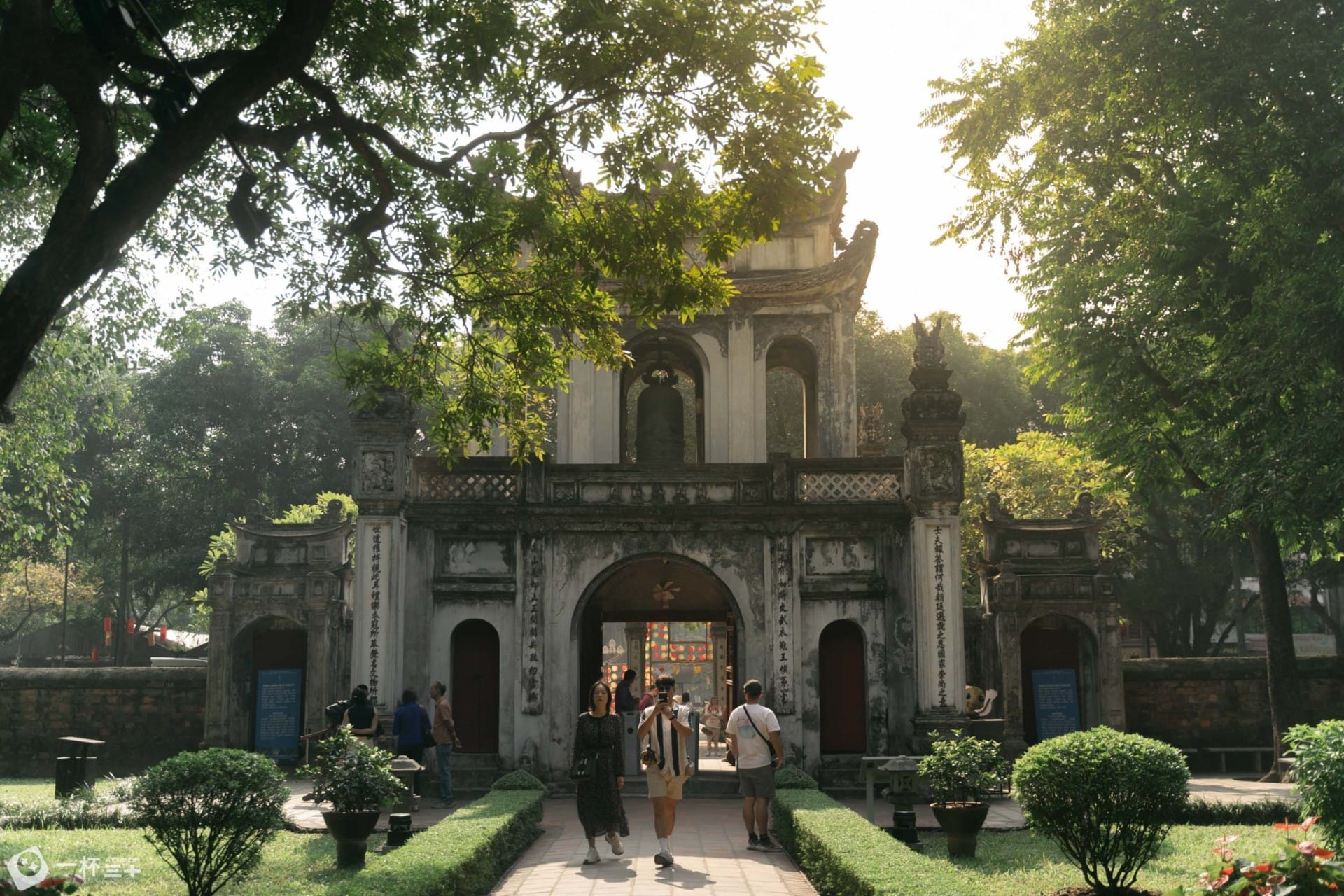
Established in 1070 to honor Confucius, and later becoming the Imperial Academy (Quốc Tử Giám) in 1076, this complex holds the prestigious title of Vietnam’s first national university.
In this article, Jiva Hoa Lư Retreat invites you to view your visit not merely as a tour of old buildings, but as a “Cultural Hunt”—an opportunity to find the historical “puzzle pieces” or “easter eggs” left by a thousand years of scholarship.
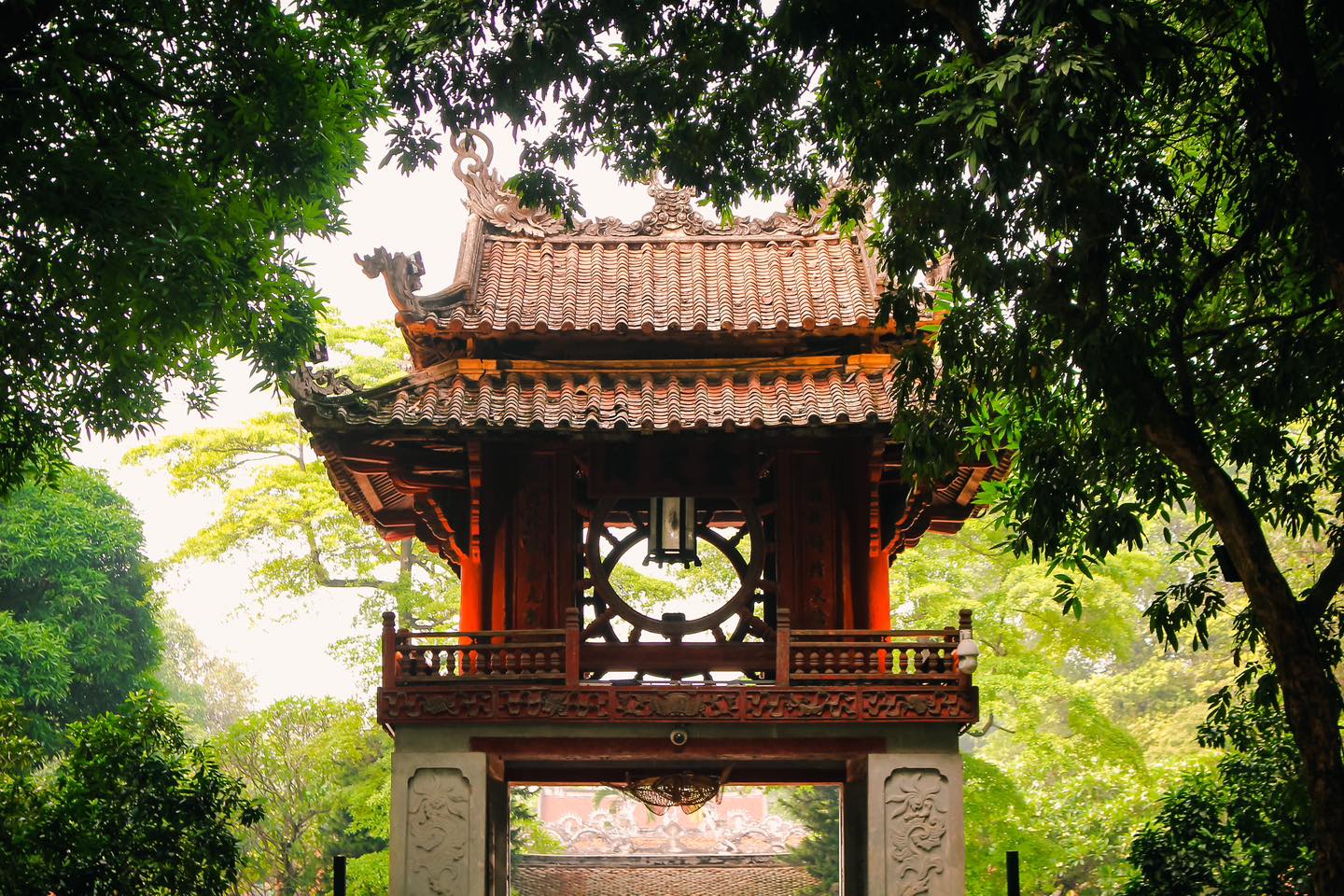
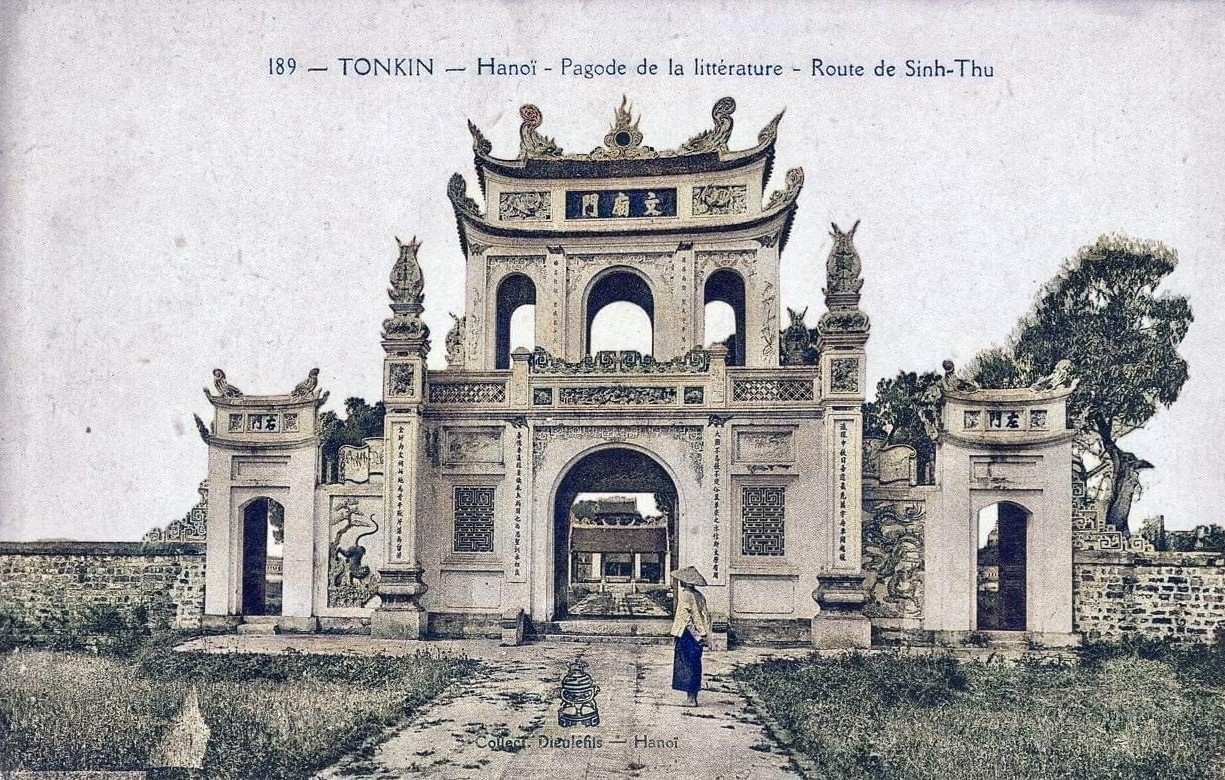
A historical front view of the Khue Van Cac, symbolizing Vietnam’s first national university (Quốc Tử Giám).
These architectural details and symbolic structures reveal the core values of Vietnamese society: meritocracy, wisdom, and respect for teachers. The Temple of Literature Hanoi is a powerful symbol of the nation’s intellectual heritage and a must-see for all travelers.
The Temple of Literature was established in 1070 during the reign of Emperor Ly Thanh Tong to honor Confucius. Known as Văn Miếu, with “Văn” meaning literature and “Miếu” meaning temple, it symbolized Vietnam’s reverence for knowledge and learning.
Just six years later, in 1076, the Imperial Academy (Quốc Tử Giám) was founded behind the temple under King Ly Nhan Tong, becoming the country’s first national university for the royal elite.
A historical depiction of Emperor Ly Thanh Tong, who established the temple in 1070 to honor Confucius and promote learning.
Initially, the Imperial Academy served only princes, nobles, and high-ranking officials. This changed in 1253, when King Tran Thai Tong expanded its access, allowing exceptionally gifted civilians to enroll. During the Tran dynasty, Chu Van An, one of Vietnam’s most respected scholars, was appointed head of the academy. He taught royal students and was later honored with a shrine beside Confucius in 1370 after his death.
The temple’s prestige grew during the Le dynasty, when Confucianism flourished. In 1484, King Le Thanh Tong ordered the creation of stelae to commemorate doctoral laureates dating back to 1442. These stone tablets, set on turtle-shaped pedestals symbolizing wisdom and longevity, marked a golden age of learning with 12 major examinations held between 1460 and 1497.
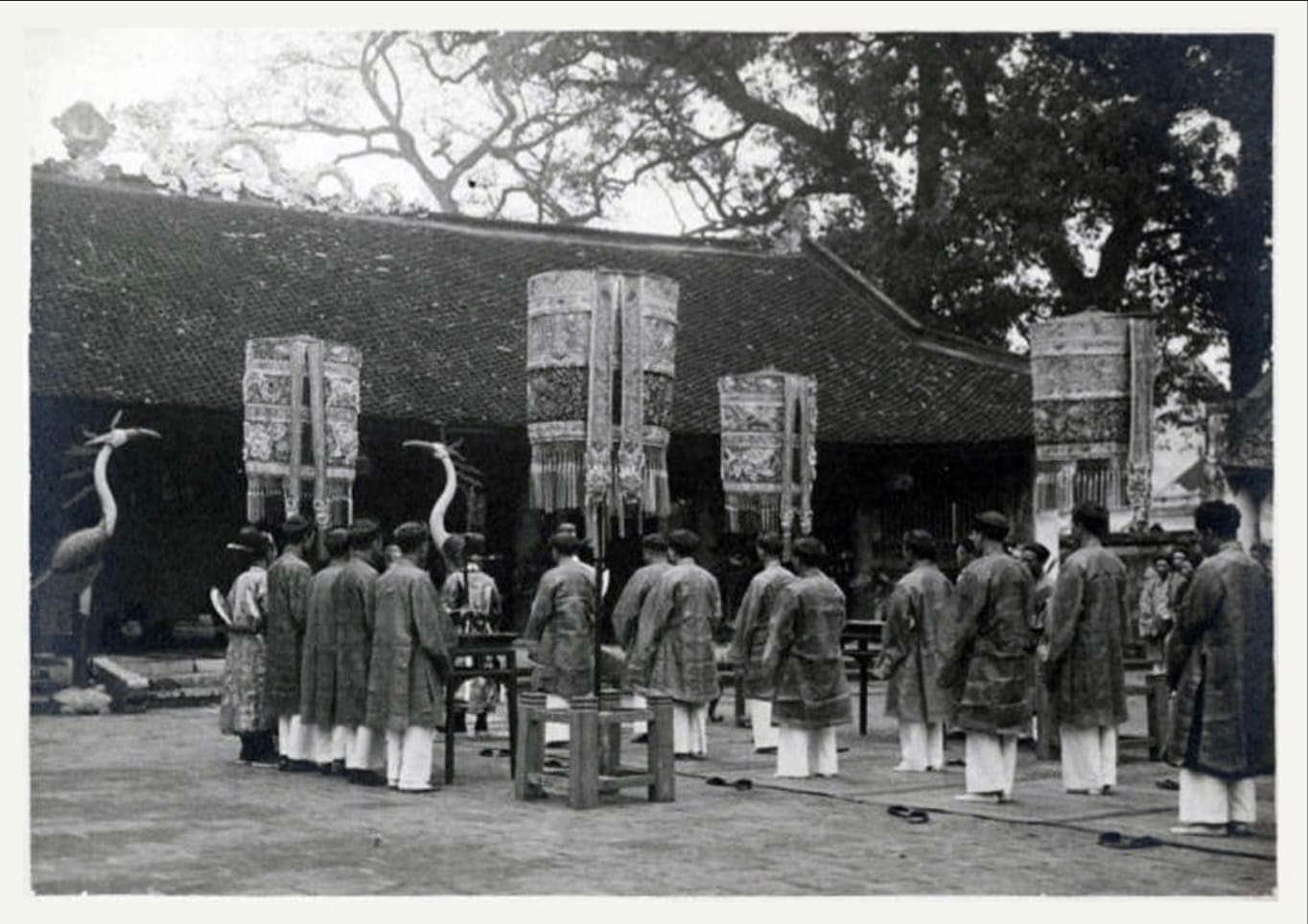
A Picture depicting scholars in formal rituals and ceremonies to honor confucius
When the Nguyen dynasty moved the capital to Hue in 1802, a new Imperial Academy was established there. The original complex in Hanoi was renamed Văn Miếu Bắc Thành, later known as Văn Miếu Hà Nội. The former academy evolved into Khai Thanh Shrine, dedicated to Confucius’ parents. Around this time, the elegant Pavilion of Constellation (Khuê Văn Các) was also constructed beside the iconic square well.
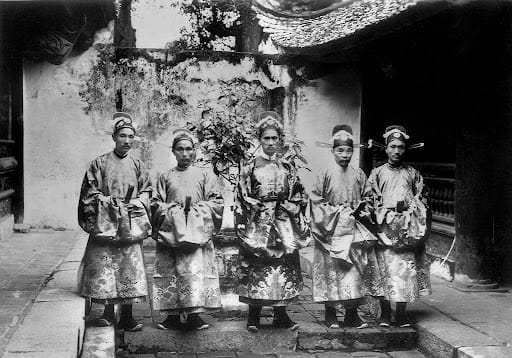
Vietnamese mandarin in wearing the robe is called “mãng bào” in which “mãng” is a four-clawed dragon, reserved for princes and high-ranking mandarins (whereas “long bào” in which “long” is a five-clawed dragon is reserved for emperors)
In 1906, the Temple of Literature was officially recognized as a historical and cultural relic by the French colonial government. Sadly, much of the complex suffered severe damage during the French war (1946 – 1954) due to aerial bombing, though restoration efforts have since preserved its legacy.
Formal education at Vietnam’s first university began in 1076 under the Ly dynasty and was further developed during the Later Le period (15th-18th centuries). Historical records from the Ly and Tran dynasties provide limited detail, but they confirm that respected Confucian scholars were selected by the royal court to teach classical texts to students. The curriculum and structure remained relatively informal until the Le dynasty introduced significant reforms.
By the Le dynasty, teaching and learning at the Temple of Literature Hanoi followed a disciplined structure. Twice a month, instructors delivered lectures on Confucian classics and historical tales. Outside of lectures, students, called Giám sinh, were expected to study independently, practice writing, and complete monthly essays.
These assignments were either done in class or taken home, then submitted to scholars for evaluation. This approach helped cultivate self-discipline and scholarly curiosity among the students.
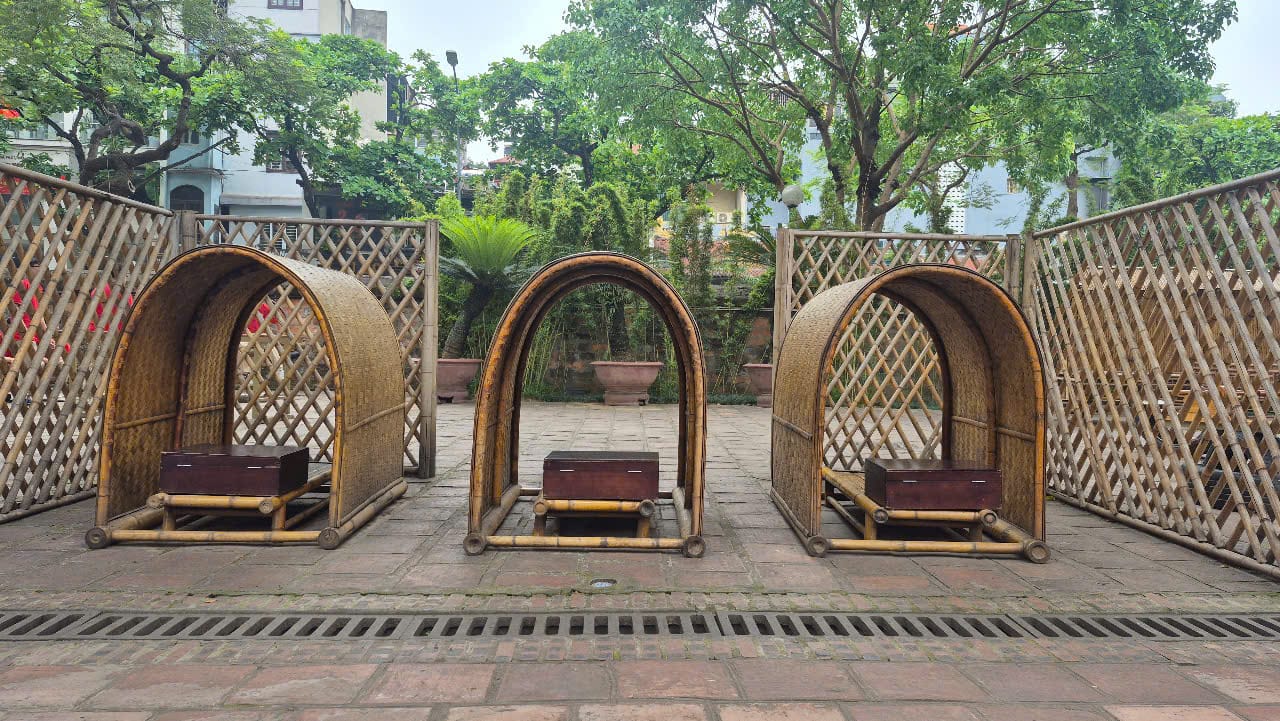
A close-up of a Bamboo examination tent or Lều chõng, used during the rigorous triennial exams.
As for examinations, aspiring scholars had to pass multiple levels to earn the title of Doctor (Tiến sĩ). The most prestigious were the Đại khoa exams, including the Regional Exam (Hội) and the Royal Exam (Đình), but before reaching these, students needed to succeed in the Hương exam, the first major step in Vietnam’s rigorous academic journey. These exams were known for their difficulty, with only a small number of candidates achieving top honors.
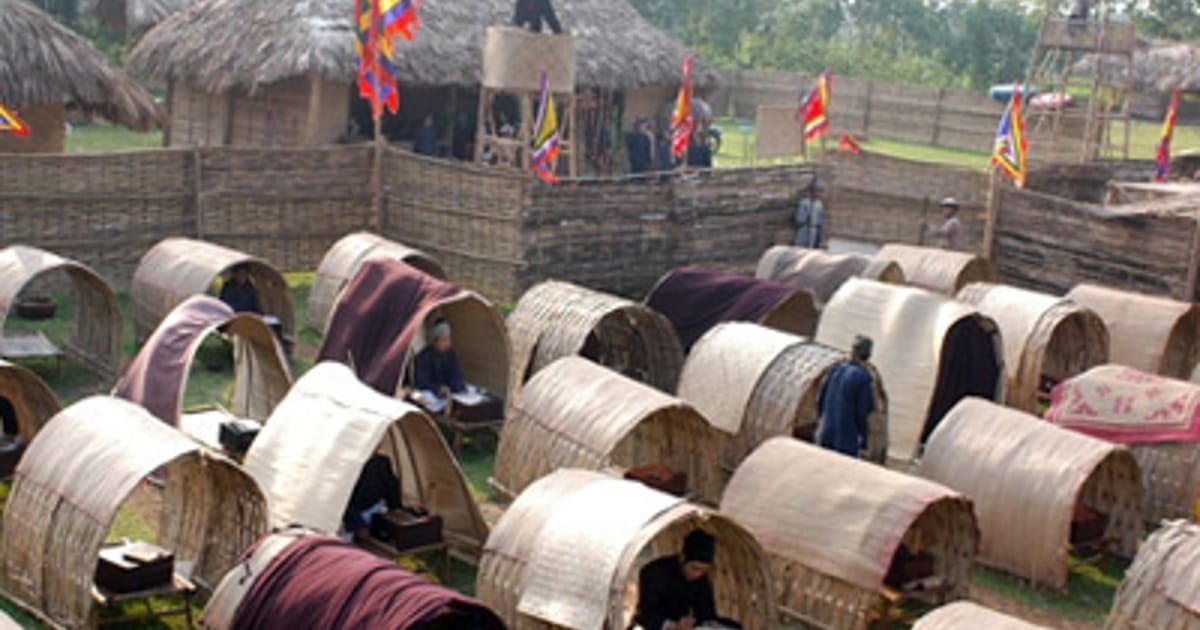
The examination area where students once prepared for the prestigious examinations at the Temple of Literature Hanoi.
Today, the Temple of Literature Hanoi remains a proud symbol of Vietnam’s scholarly heritage. Before important national exams, many students visit this historic site to pray for success, seek inspiration, or receive calligraphy blessings. This tradition reflects a lasting respect for education and the enduring spirit of academic excellence in Vietnamese culture.
The Temple of Literature Hanoi is meticulously structured into five enclosed courtyards, designed to guide visitors (and historically, scholars) on a metaphorical journey of enlightenment, moving from the outer world to the inner sanctum of sacred learning.
The sequence of five enclosed courtyards, representing the gradual path from the profane to the sacred knowledge.
The journey begins at the First Courtyard, featuring the picturesque Văn Hồ (Literature Lake), marking a peaceful start to the academic path. Moving through the Đại Trung Gate, you proceed to the Second Courtyard, where the iconic Khuê Văn Các Pavilion stands—a visual representation of the academic core.
The subsequent courtyards lead deeper into the historical and spiritual heart of the complex, representing higher stages of scholarly attainment and culminating in the worship halls and the historical site of the Imperial Academy itself.
The Temple of Literature Hanoi is an essential stop for anyone exploring the capital. To plan the best time to see Hanoi’s top attractions and avoid crowds, check our comprehensive guide on the Best Time to Travel to Vietnam 2025: When to Go and Where to Visit.
The true magic of the Temple of Literature Hanoi lies in its symbolic architecture, where every gate, pond, and statue holds a profound cultural secret.
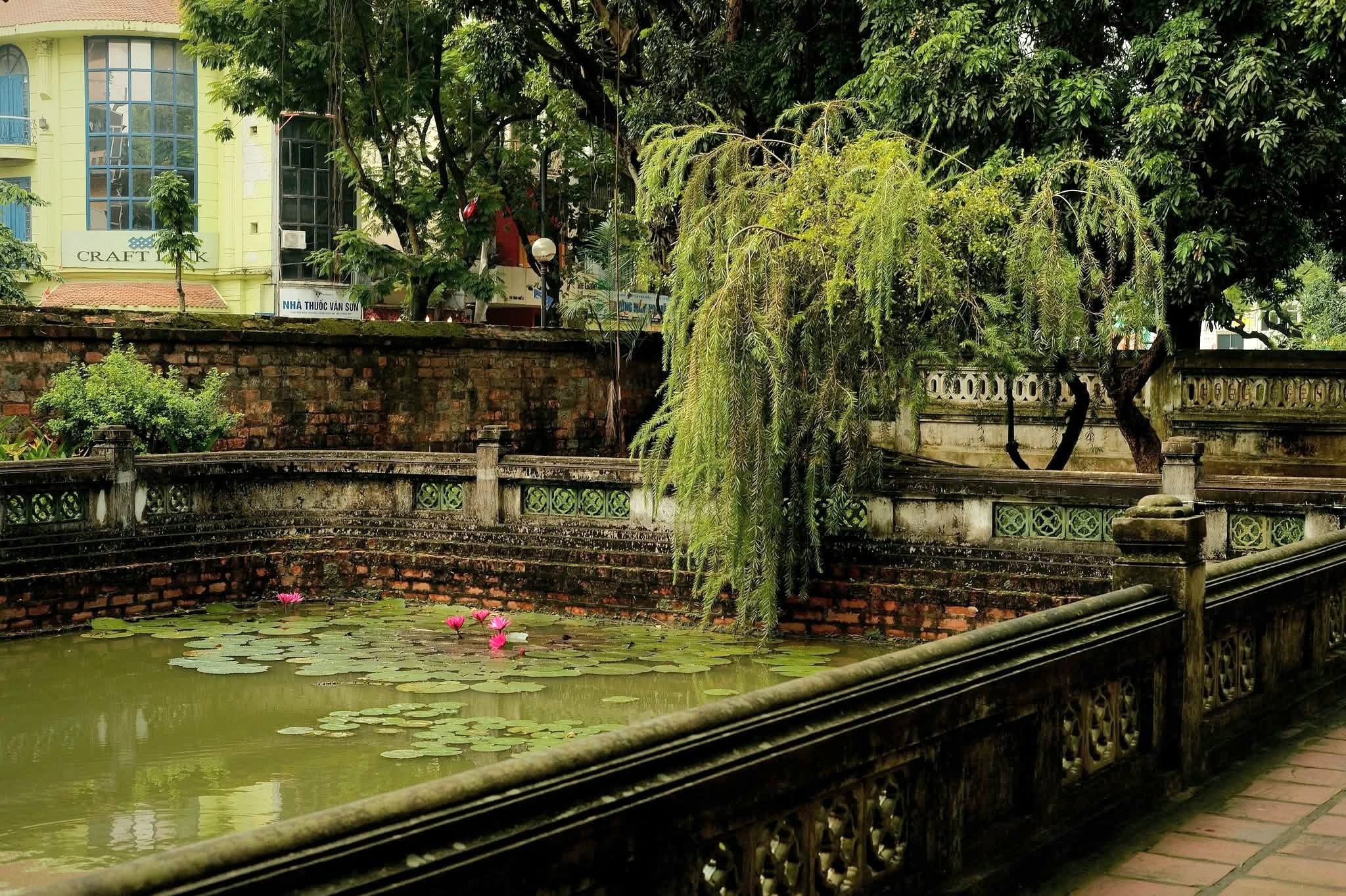
The large, picturesque Văn Hồ (Literature Lake) lies immediately in front of the main entrance to the Temple of Literature Hanoi. This lake is more than just a tranquil backdrop; it holds deep feng shui and cultural significance. Known as “Tụ Thủy” (Gathering of Water) in Oriental philosophy, the water symbolizes the accumulation of wealth, talent, and, most importantly, wisdom.
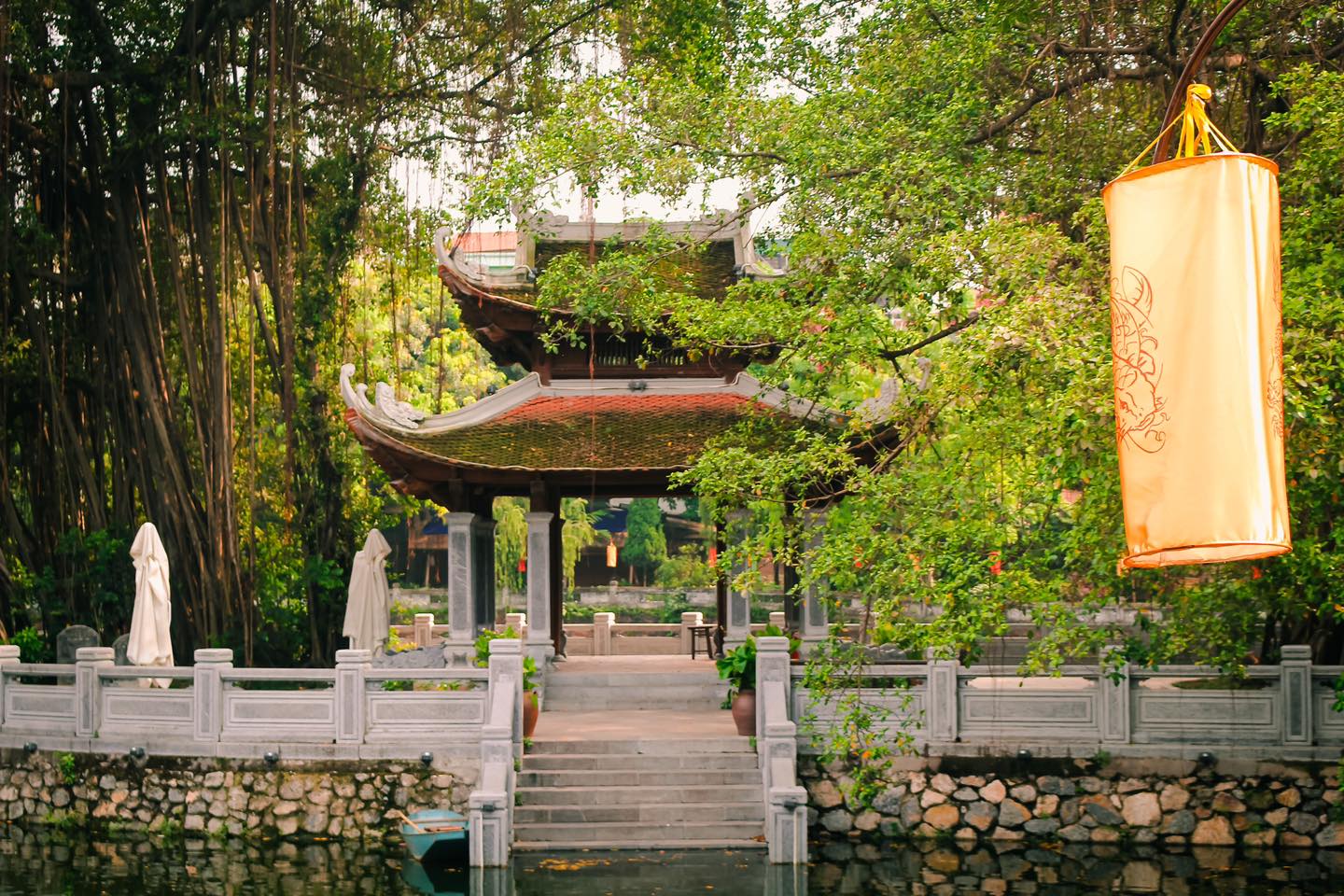
The picturesque Văn Hồ (Literature Lake), creating a peaceful, contemplative mood at the entrance.
This peaceful setting, which once included a small island (Kim Châu) where scholars would gather to compose poetry and discuss philosophy, creates a beautiful and contemplative contrast with the busy urban life of modern Hanoi, embodying the quiet focus required for study.
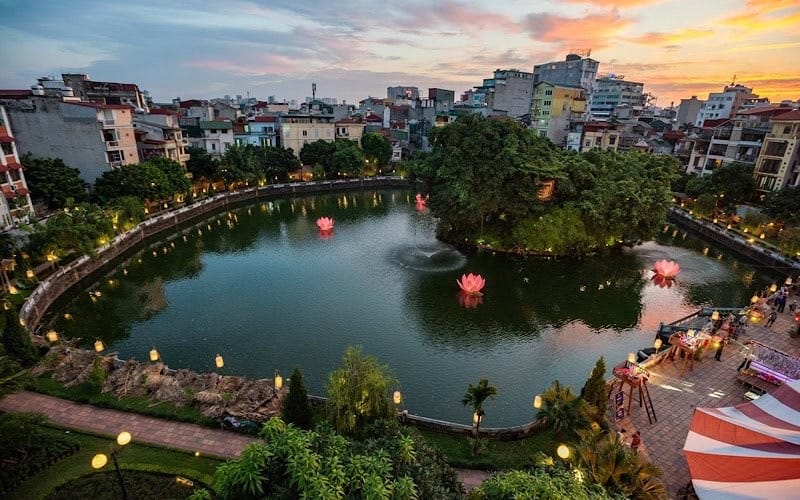
The lake symbolizes “Tụ Thủy” (Gathering of Water), representing the accumulation of talent and wisdom (feng shui).
Situated to the west of the temple, Giam Park is a landscaped garden that plays an important role in preserving the cultural atmosphere of the site.
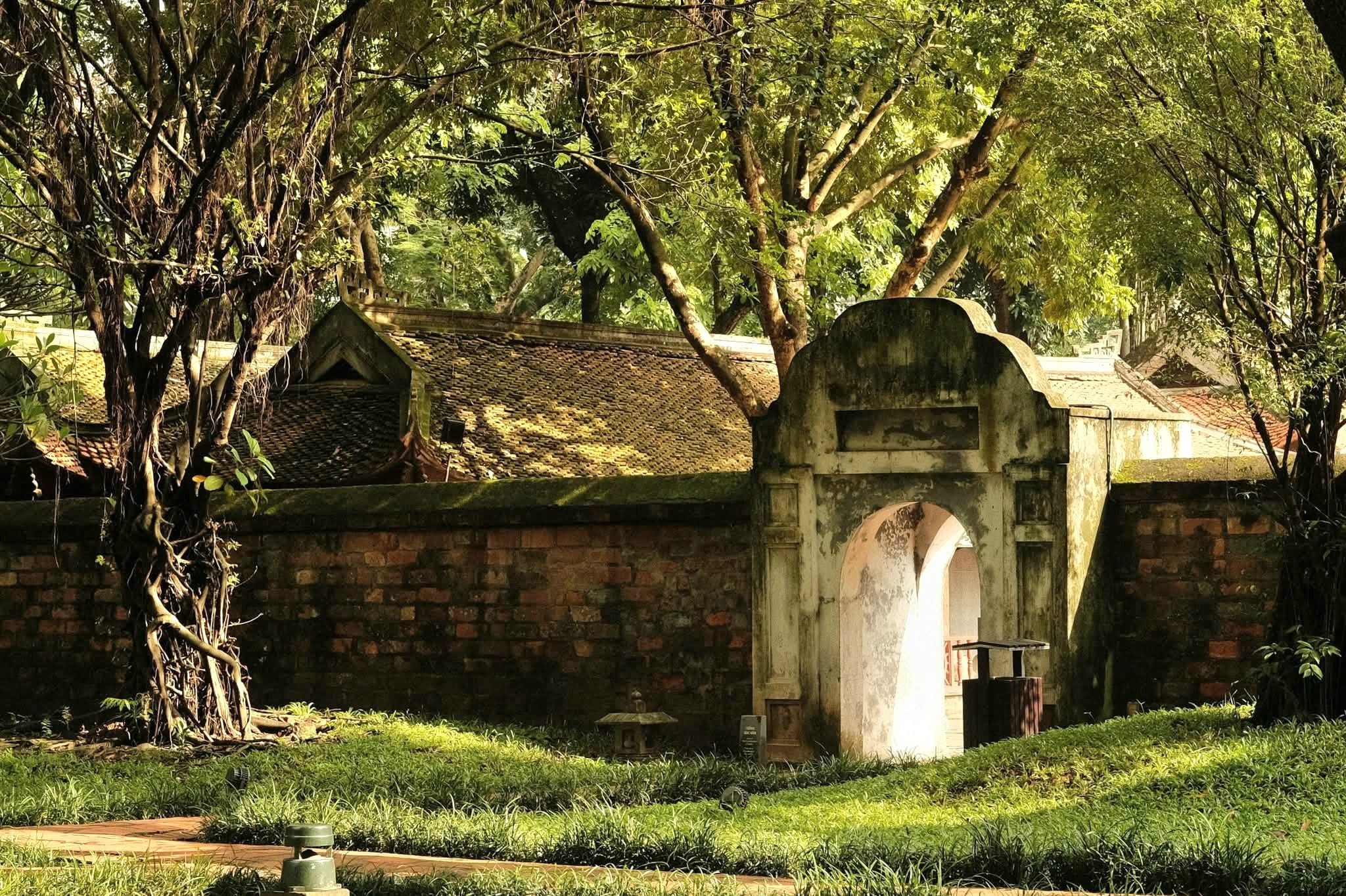
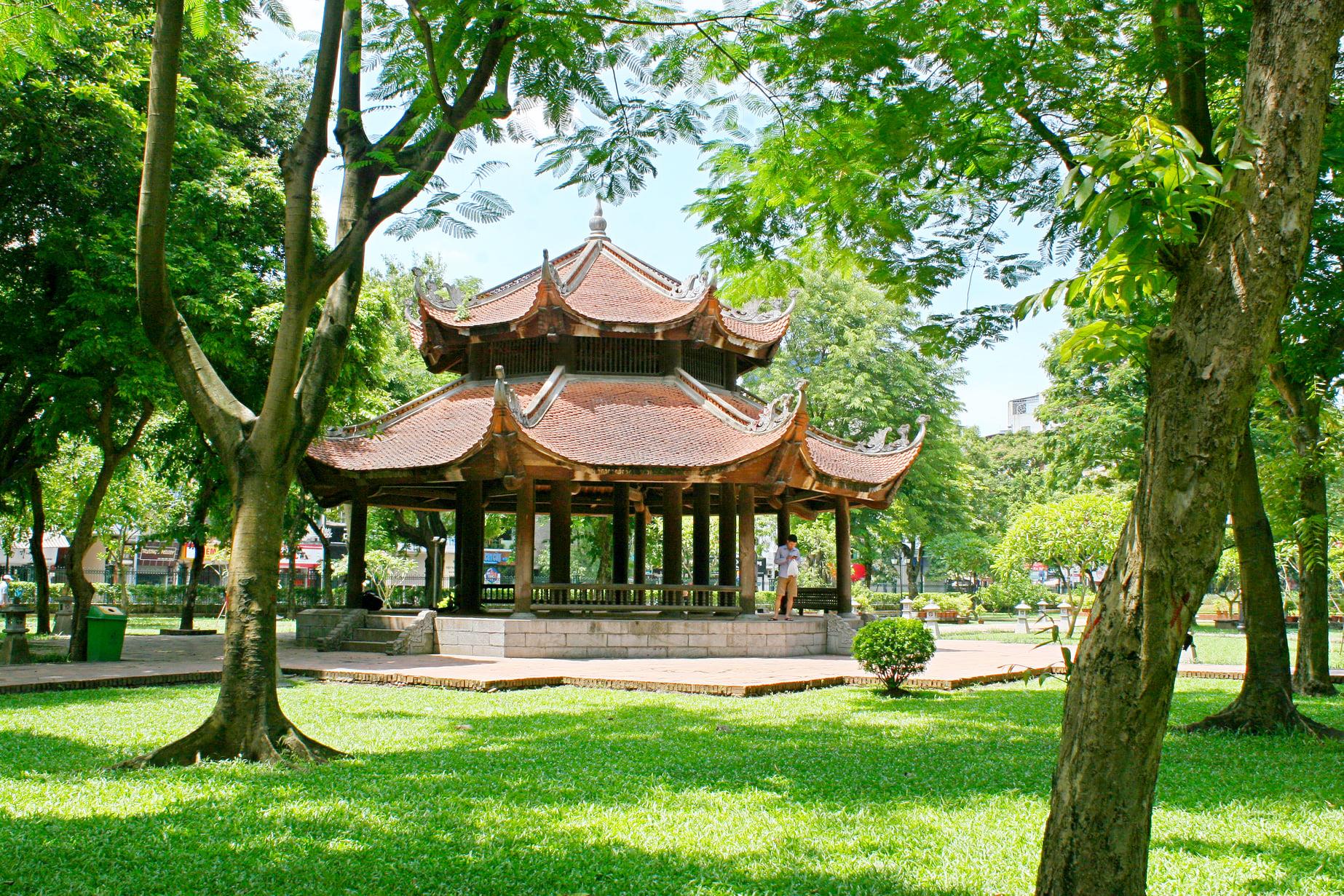
Home to ancient trees, bonsai, and traditional octagonal pavilions, the park frequently hosts artistic events, especially during Tet (Lunar New Year). Expect to see water puppet shows, dragon dances, and poetry readings that bring the spirit of the past into the present.
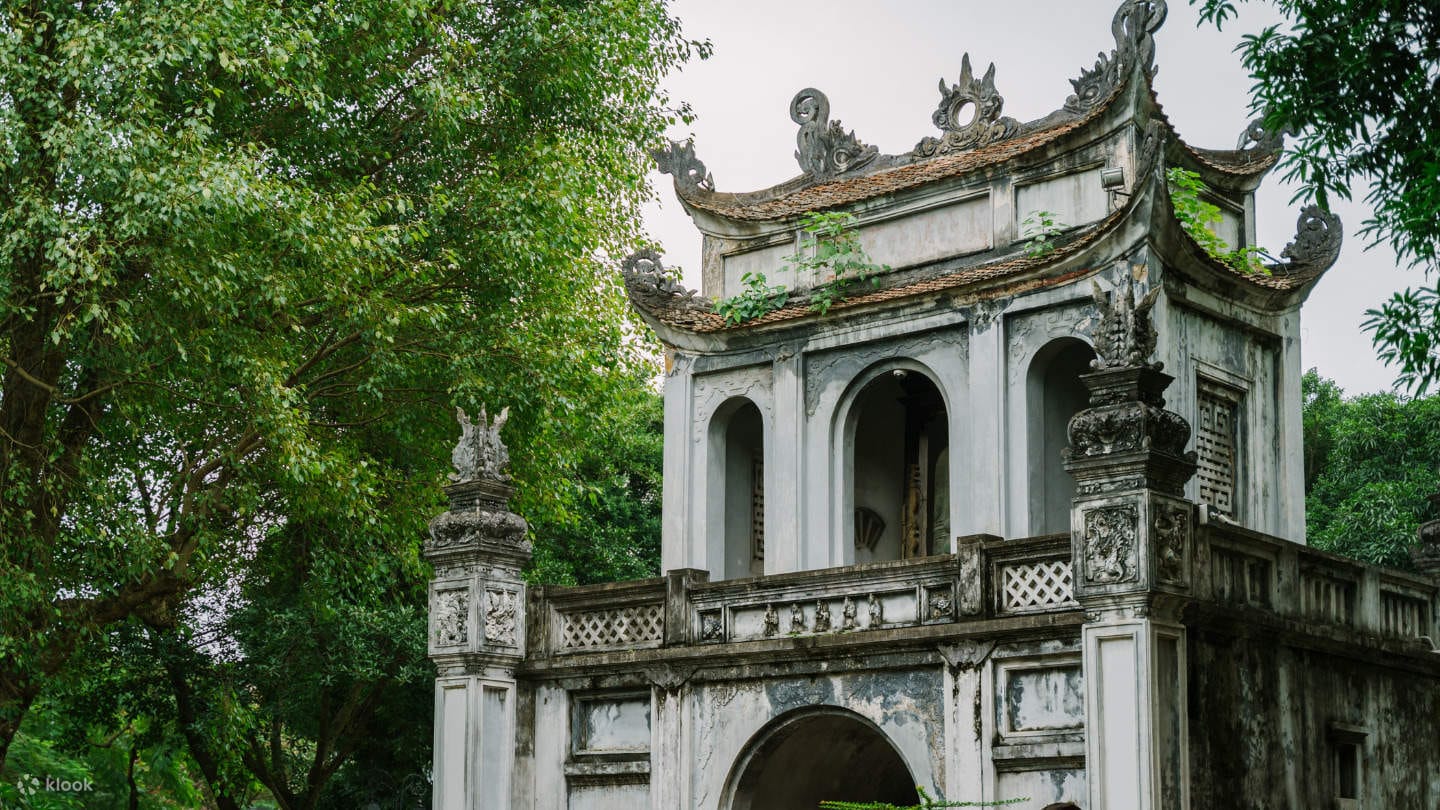
The main front gate of the Temple of Literature Hanoi is not merely an entrance; it is a profound architectural statement and the first “puzzle piece” welcoming scholars and visitors. Built in the 19th century, this two-tiered, three-door brick structure is adorned with intricate patterns and couplets praising Vietnam’s Confucian education system.
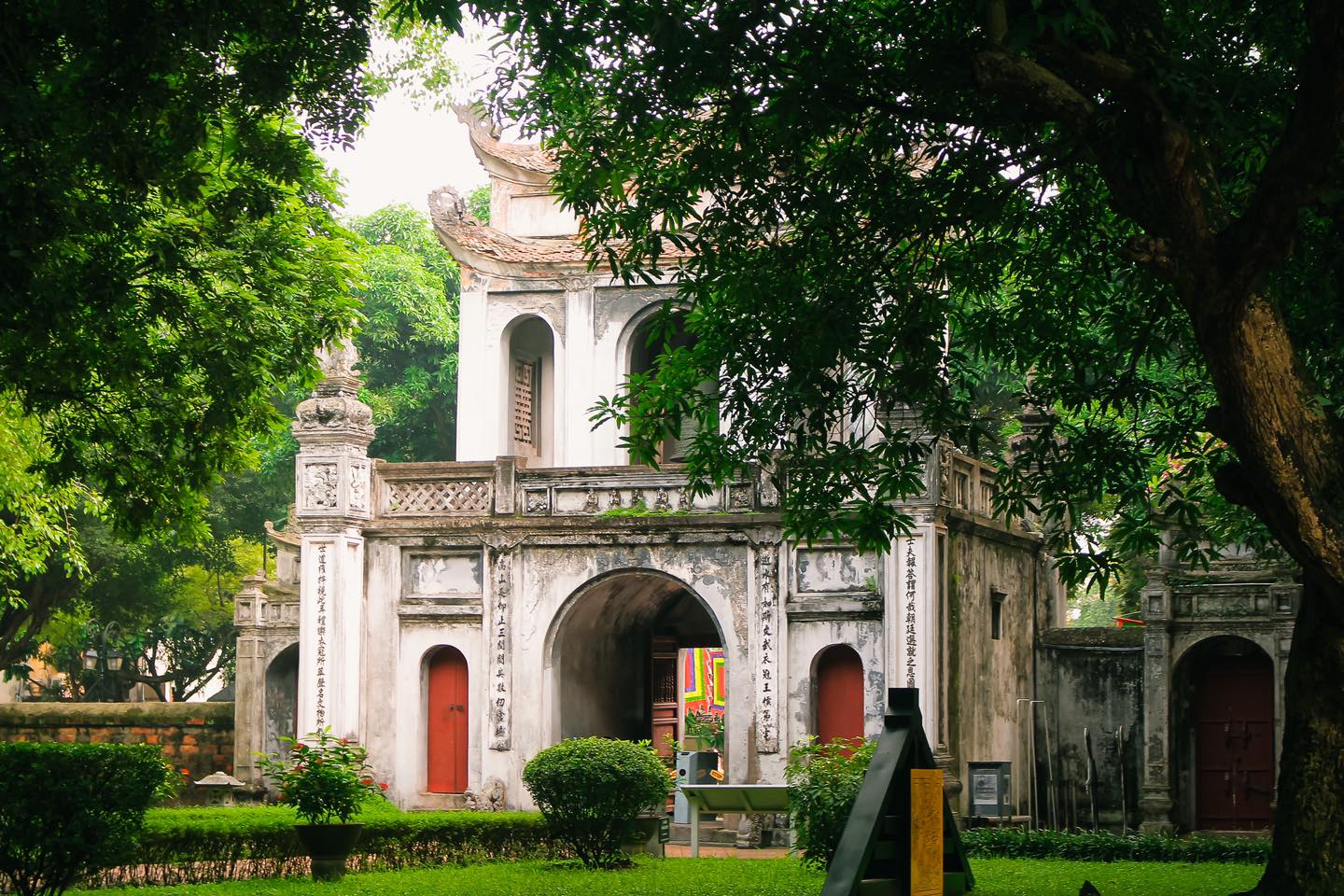
The two-tiered front gate of the Temple of Literature Hanoi, adorned with couplets and artistic carvings.
What truly unlocks the gate’s meaning, however, are the two symbolic bas-reliefs flanking the facade. On the left, the “Carp Turning into a Dragon” (Cá chép hóa rồng) depicts a legendary carp successfully leaping over the Vũ Môn waterfall to transform into a mythical dragon. This image is the ultimate allegory for the scholar’s arduous journey: symbolizing the perseverance, discipline, and hard-earned success required to conquer knowledge and pass the royal examinations.
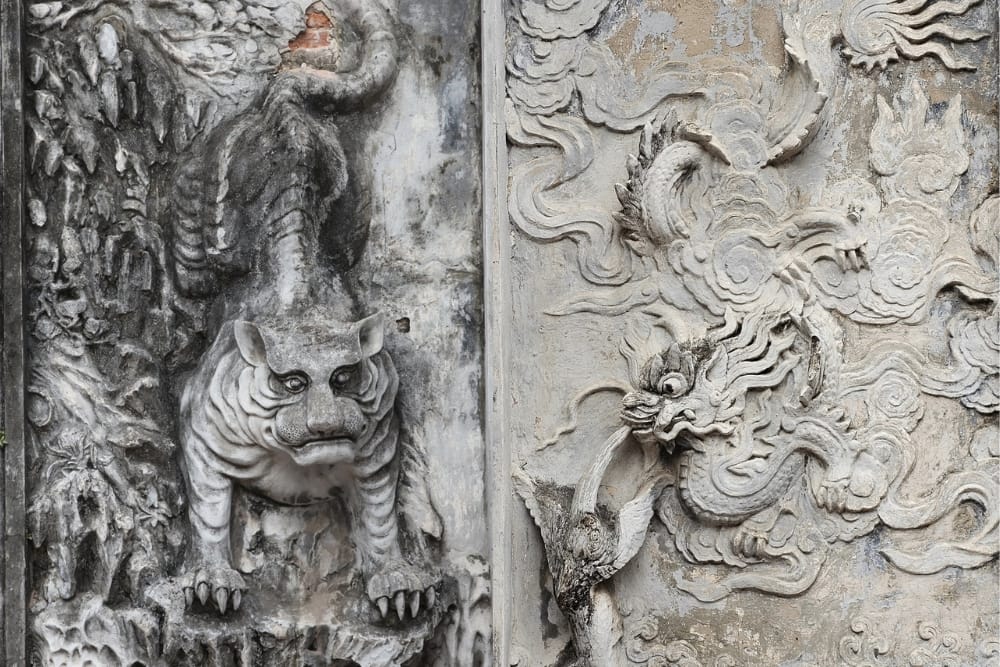
bas relief depicting Carp Turning into a Dragon Fierce Tiger Descending the Mountain on two side of the gate
On the right, the scene shifts to the “Fierce Tiger Descending the Mountain” (Mãnh hổ hạ sơn). The mighty tiger, an ancient Vietnamese symbol of power and authority, represents the high-achieving scholar (thức giả) who has completed their studies and now descends into society with confidence and moral strength to serve the nation.
These reliefs establish the ethos of the Temple of Literature Hanoi from the very start: dedication leads to power, and knowledge empowers service.
Entering the first courtyard through the Great Middle Gate, visitors are welcomed by a peaceful, green space that sets a contemplative tone. Atop the gate sits a sculpted fish, an emblem of perseverance.
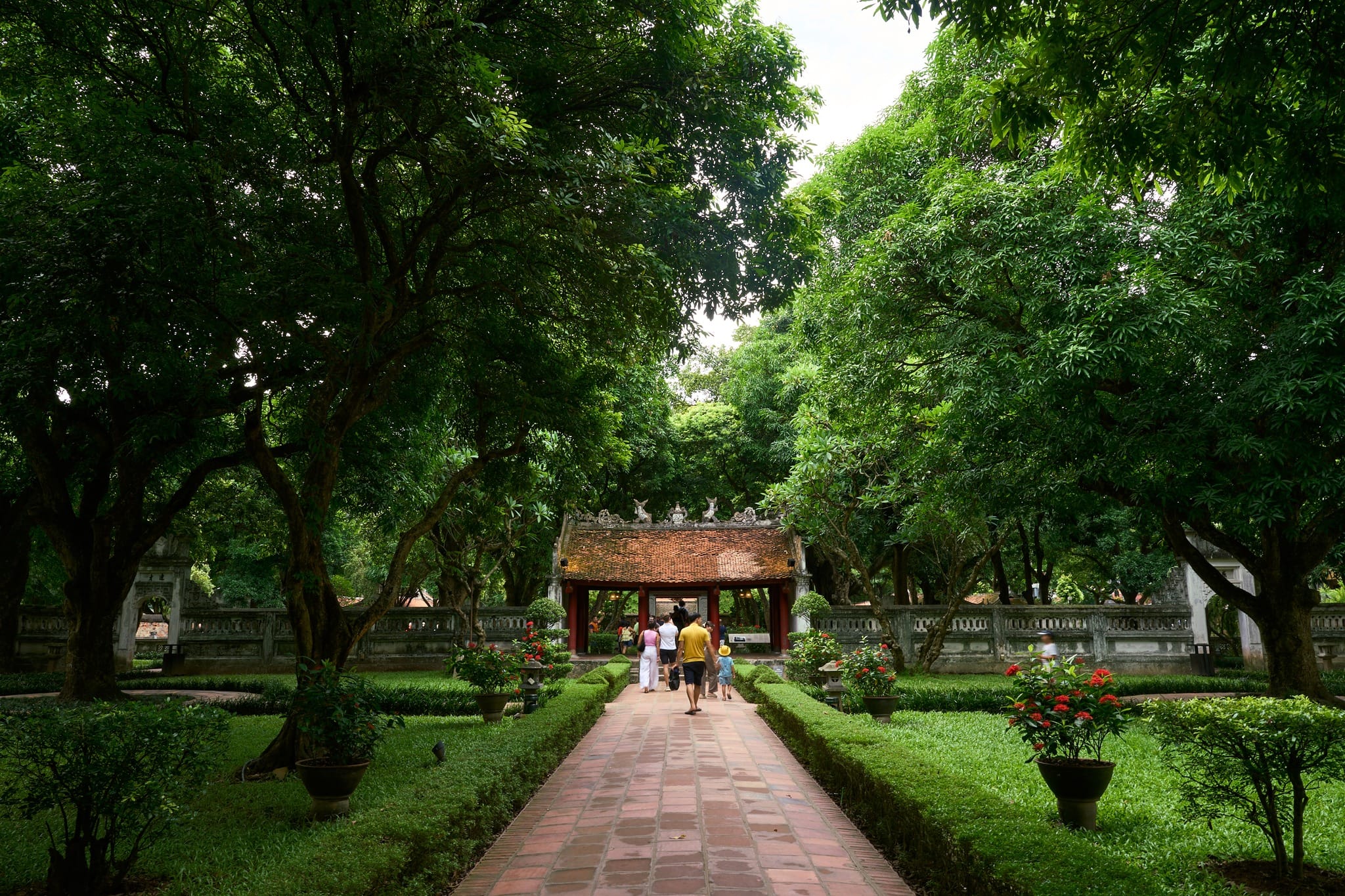
he journey through the Temple of Literature begins at the Great Middle Gate
According to legend, only the fish that leap over the fiercest waves can transform into dragons. Here, the fish symbolize students, reminding visitors of the determination required to pass rigorous exams and rise to greatness.
Folks metaphorically represents students’ journey – only through diligent study can they excel in examinations and become government officials
The Khuê Văn Các Pavilion is arguably the most recognizable piece of the puzzle—a striking two-tiered wooden structure built in 1805 that has become a beloved symbol of Hanoi. Positioned strategically on the central axis of the complex, this elegant pavilion visually represents the Constellation of Literature (Sao Khuê).
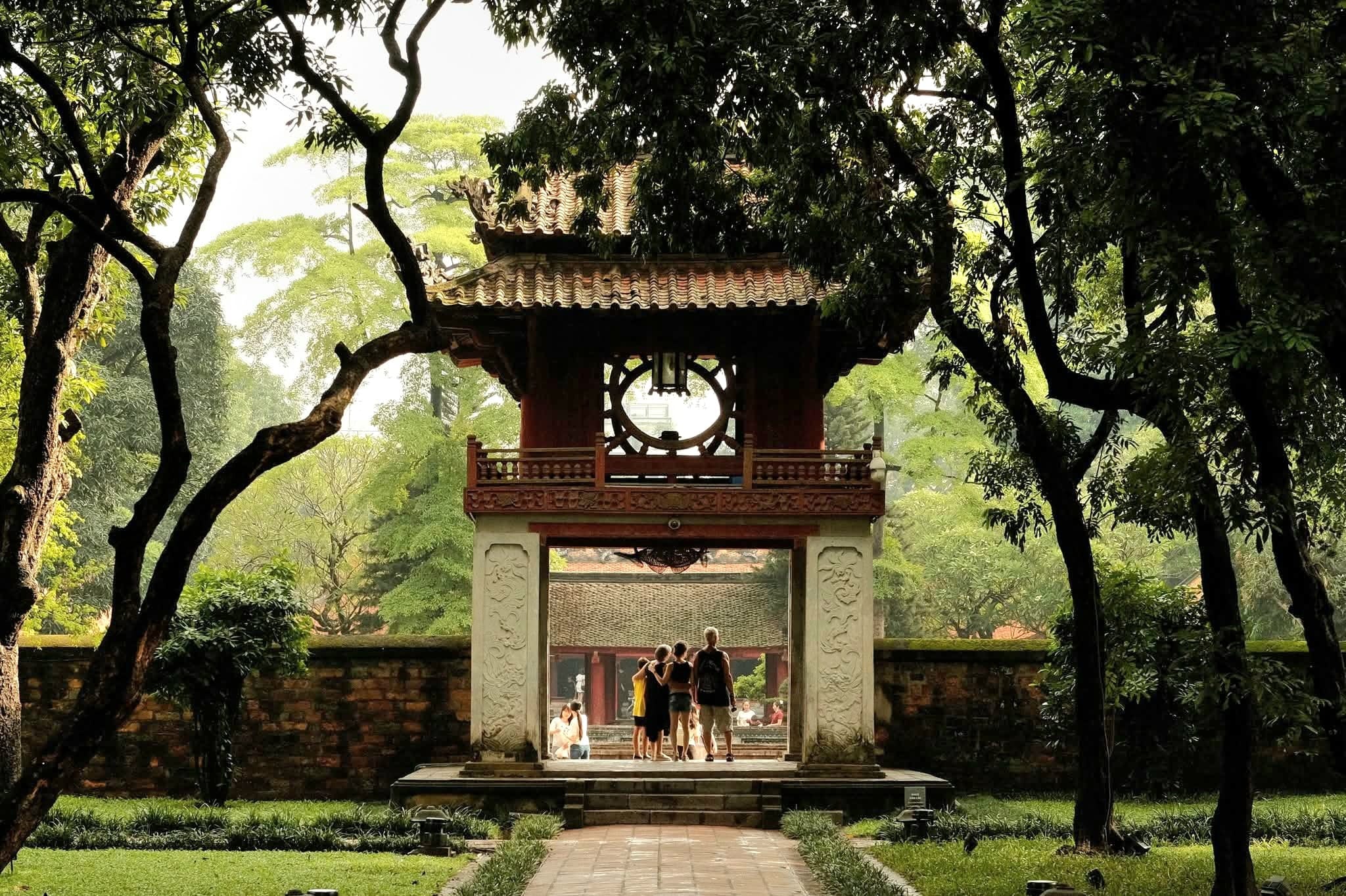
The structure’s most distinctive features are the four circular windows on each face of the upper tier, which symbolize the shining light and brilliance of knowledge radiating outwards. The Khuê Văn Các is a powerful, architectural expression of the academic ideal and the emphasis placed on cultural excellence at the temple of literature hanoi.
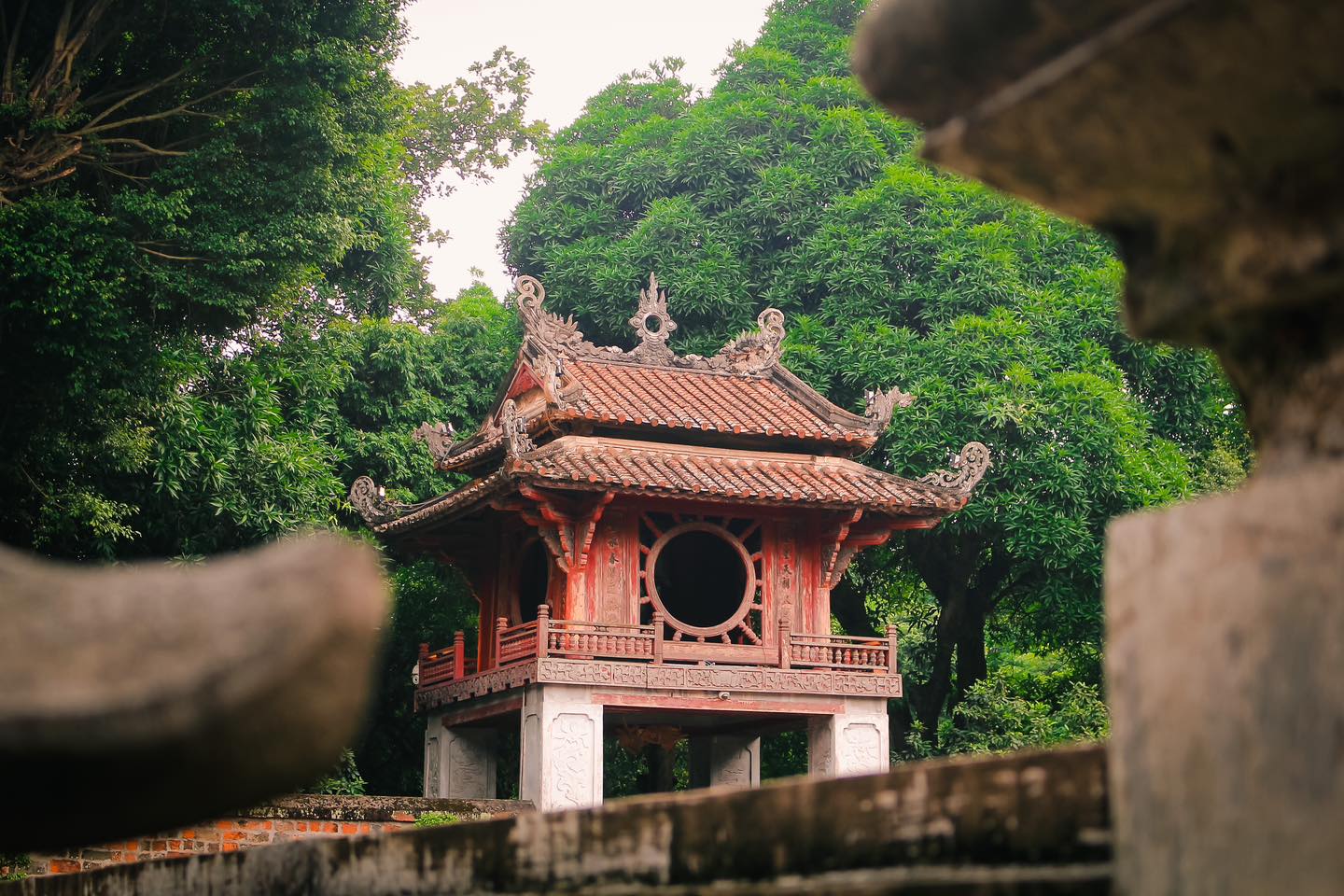
The four circular windows of the pavilion, symbolizing the shining light and brilliance of knowledge radiating outwards.
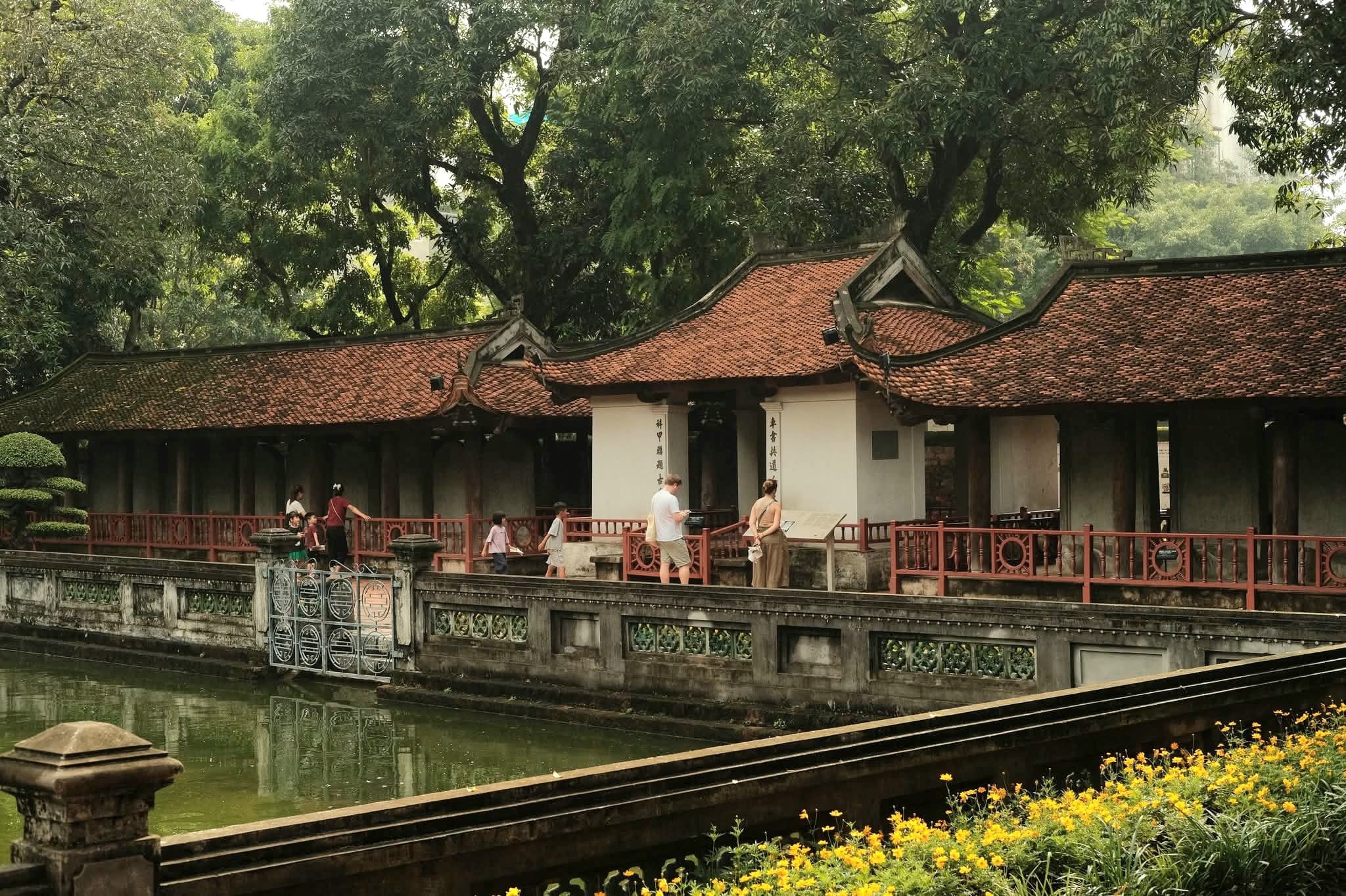
The third courtyard centers around a perfectly square pond known as the Well of Heavenly Clarity. Surrounding it are rows of stone turtles carrying stelae, large tablets inscribed with the names and achievements of Vietnam’s doctoral laureates.
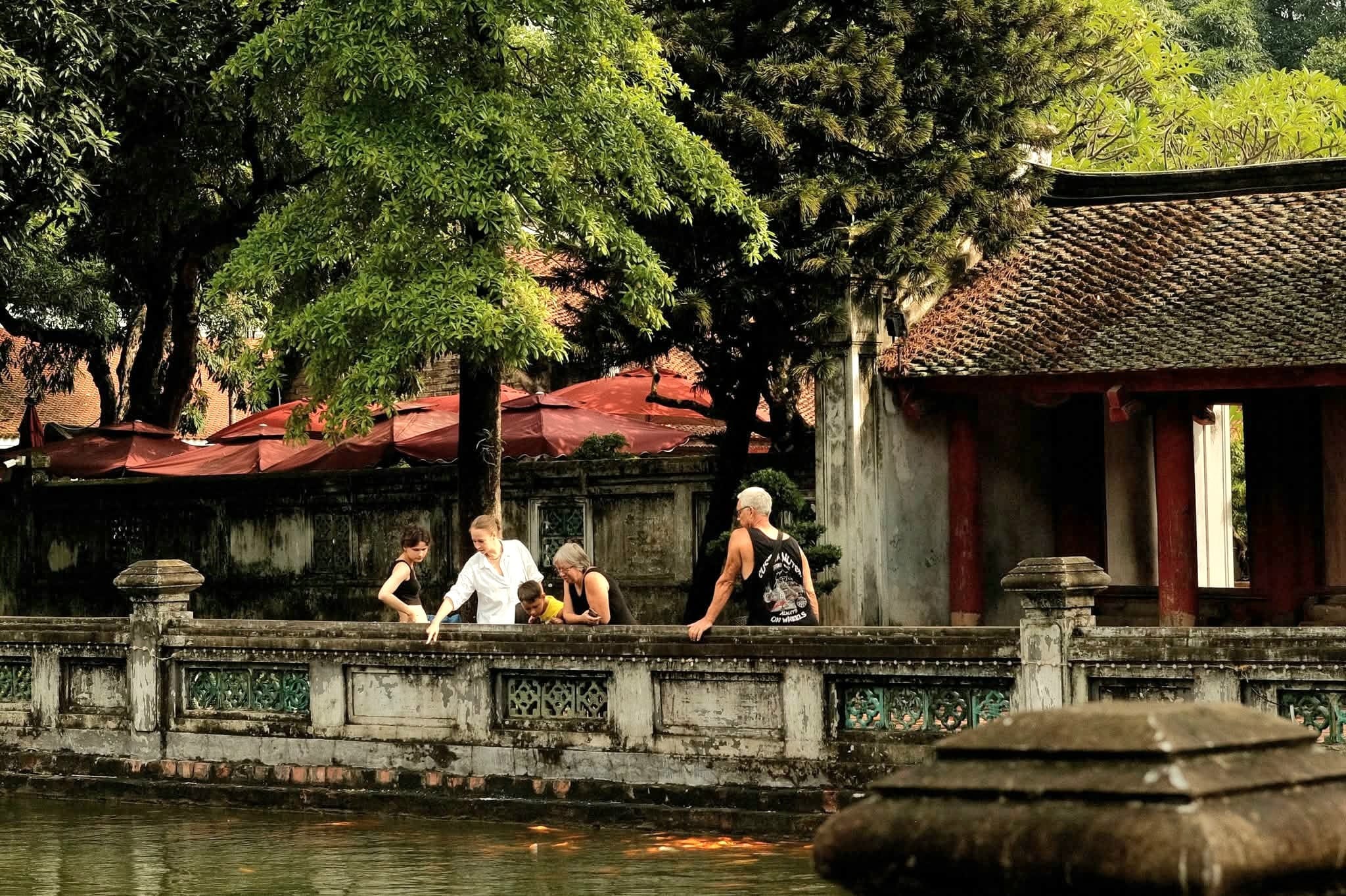
These records offer insights into each dynasty’s values, the prestige of Confucianism, and the stories of scholars who once walked these grounds.
The Khu Bia Tiến Sĩ (Stone Stelae area) is the most historically profound “easter egg.” Here, 82 magnificent stone stelae sit atop large, beautifully carved stone turtles. These stelae are the only surviving records of the successful doctoral candidates who passed the rigorous triennial royal examinations between 1442 and 1779.
Each stela resting firmly atop a stone turtle, symbolizing longevity, wisdom, and enduring strength.
Each Royal Turtle symbolizes longevity, wisdom, and the enduring strength required to achieve success. In 2010, these 82 stelae were recognized by UNESCO as a World Documentary Heritage, confirming their unique global value as a physical testament to over 300 years of academic pursuit and Vietnam’s deeply rooted tradition of meritocracy
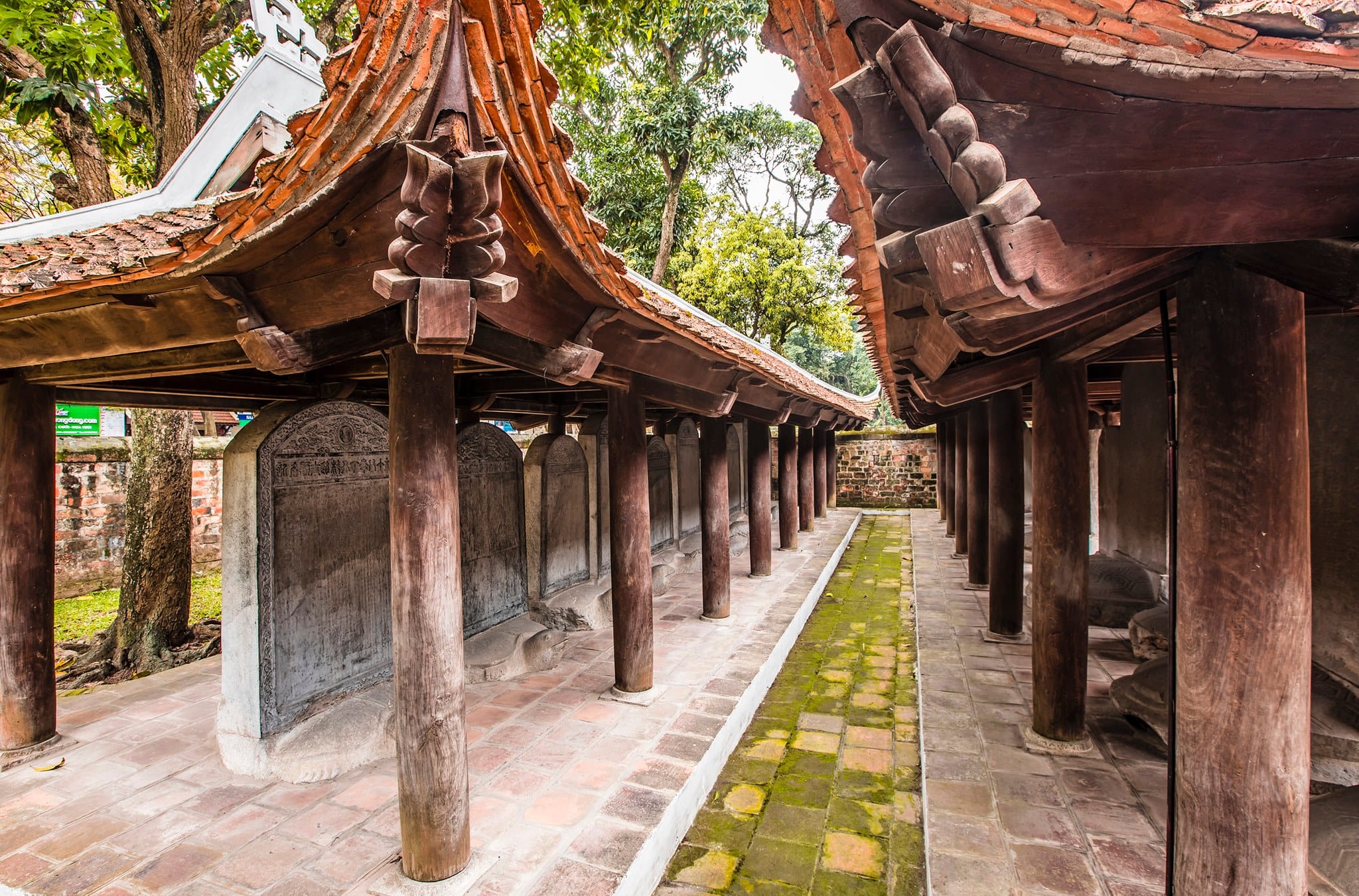
Rows of historical stelae, confirming the Temple of Literature Hanoi as a testament to Vietnam’s meritocracy.
Beyond the third courtyard lies the fourth, where the atmosphere turns reverent. Here you’ll find the House of Ceremonies and a sanctuary dedicated to Confucius.
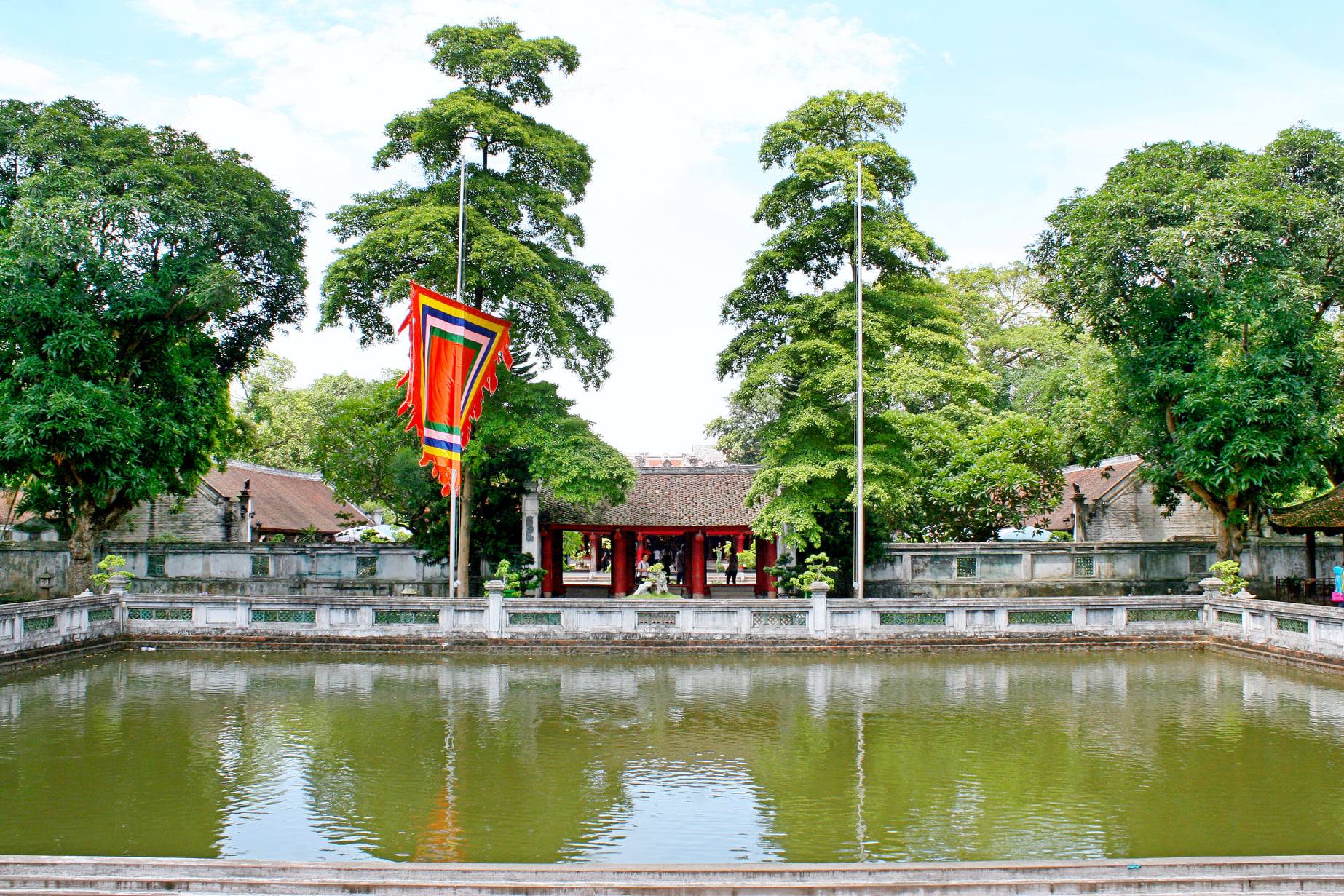
The Hall of Great Synthesis (Điện Đại Thành), the spiritual core of the complex where Confucius is honored
The space is defined by deep crimson columns, intricate wooden beams, and softly glowing lanterns. It is a place of honor and respect, reflecting the values of education, virtue, and tradition passed down through generations.
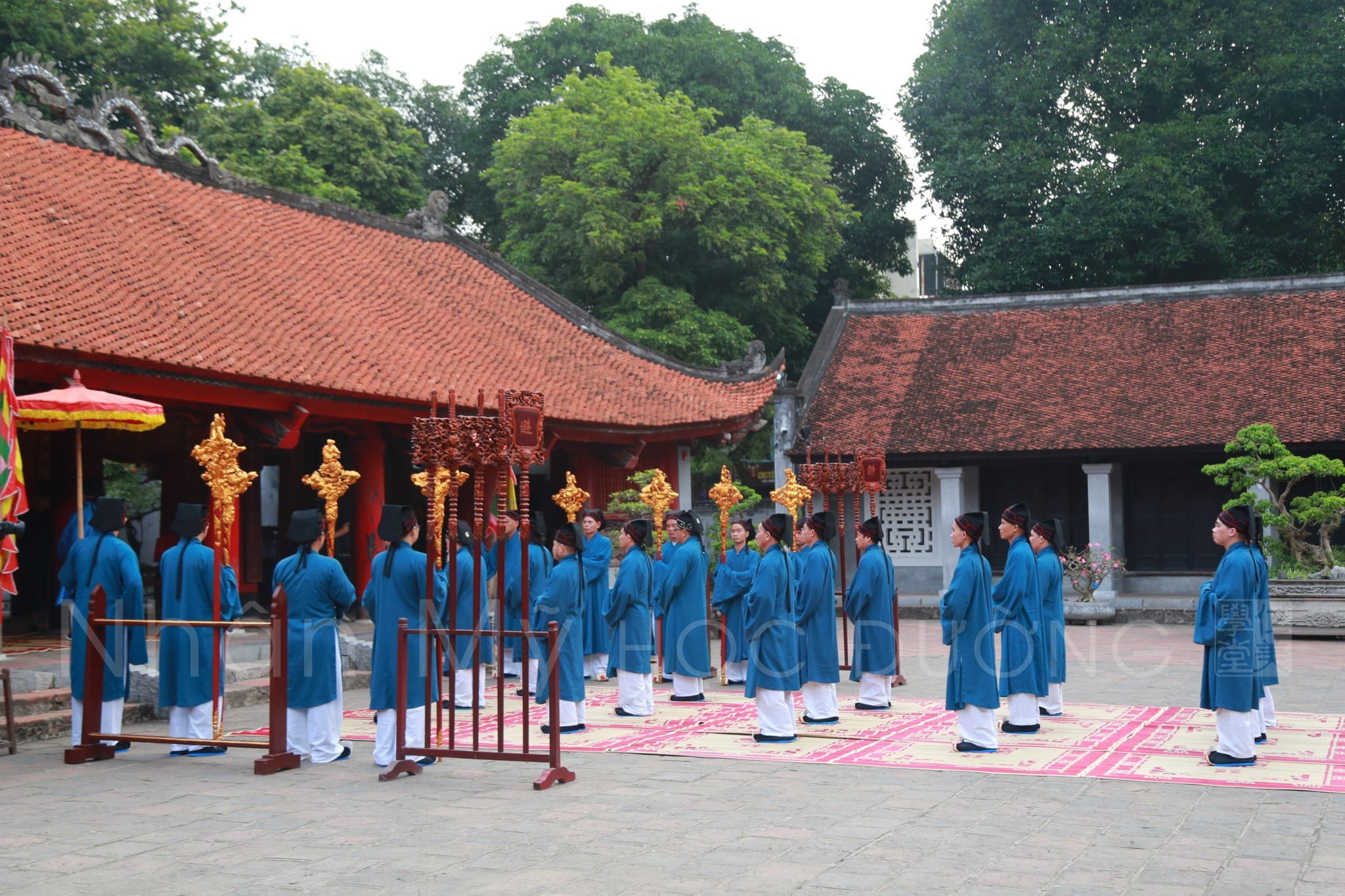
While the Hall of Great Synthesis (or Great Success Hall) is a key area where ceremonies are held
At the very heart of the Temple of Literature Hanoi, within the Hall of Great Synthesis (Điện Đại Thành), lies the spiritual core of the complex: the rich collection of statues honoring the most revered figures of Confucian scholarship.
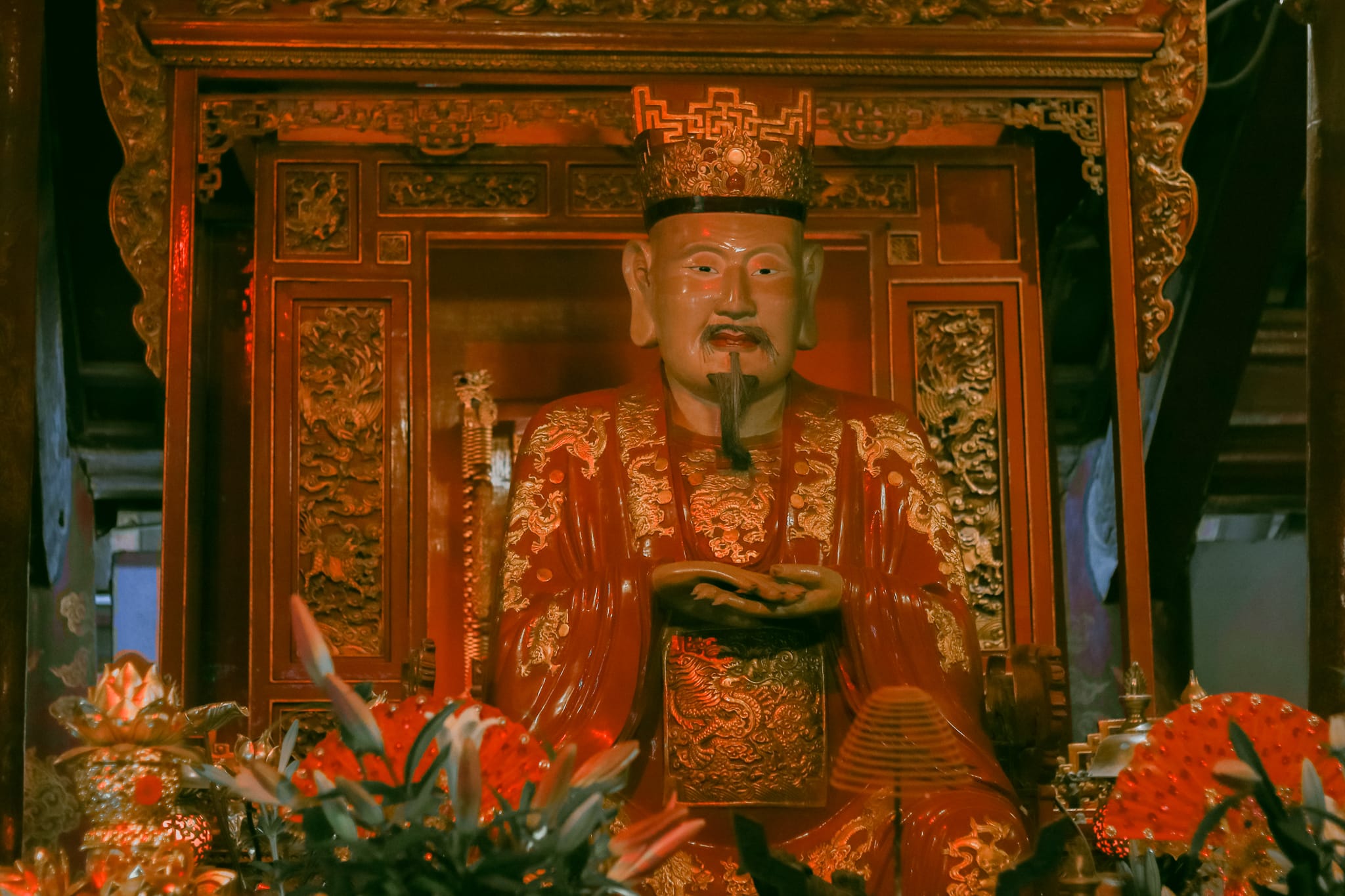
The central statue of Confucius, flanked by his four meticulously positioned Sages (Tứ Phối).
This intricate system of worship features the central figure of Confucius himself, flanked by his four most prominent disciples, collectively known as the Four Sages (Tứ Phối). These disciples are positioned meticulously according to their status and seniority: Confucius is enshrined in the center, seated majestically. On the inner left is Yan Hui (Nhan Hồi), and on the inner right is Zeng Shen (Tăng Sâm). The outer layer features Zisi (Tử Tư) on the left and Mencius (Mạnh Tử) on the right.
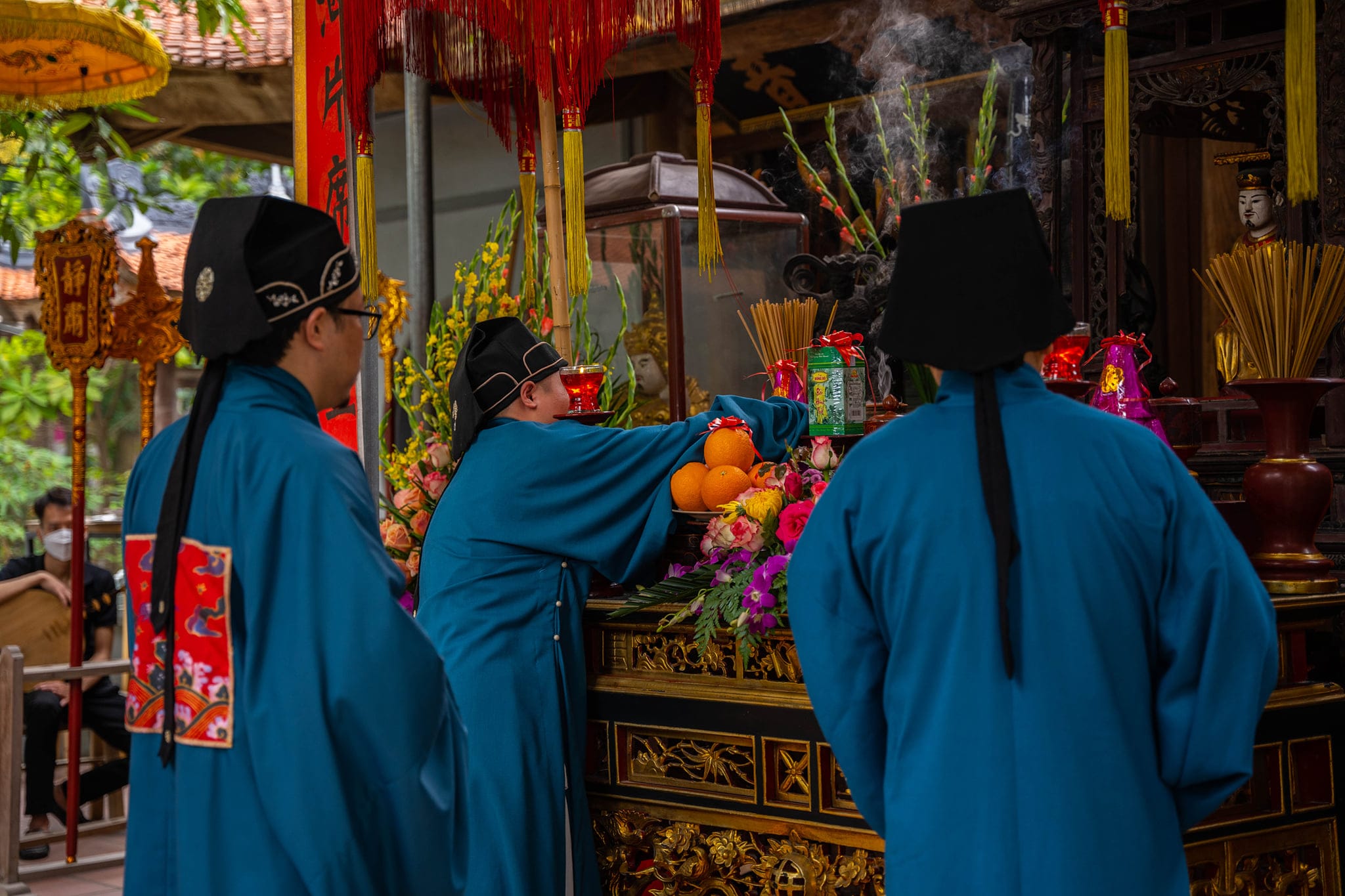
This area is the heart of the temple, housing altars and statues of Confucius and his greatest disciples, and it is used for important academic events and traditional ceremonies.
All five statues are crafted from high-quality materials, with their seated posture—feet placed neatly forward—conveying both profound dignity and humility. This arrangement is a powerful visual representation of the Confucian hierarchy of wisdom and respect for mentorship. Beyond the sheer craftsmanship, the Hall of Great Synthesis serves as a solemn reminder of the philosophical foundations that shaped the education and moral fabric of the nation for nearly a thousand years. It is here that visitors truly feel the weight of history and the enduring spirit of learning that defines the Temple of Literature Hanoi.
The fifth courtyard is home to a two-story structure that once served as the academic center of Vietnam’s first university. On the ground floor stands a statue of Chu Van An, one of the nation’s most admired educators, who devoted his life to teaching.
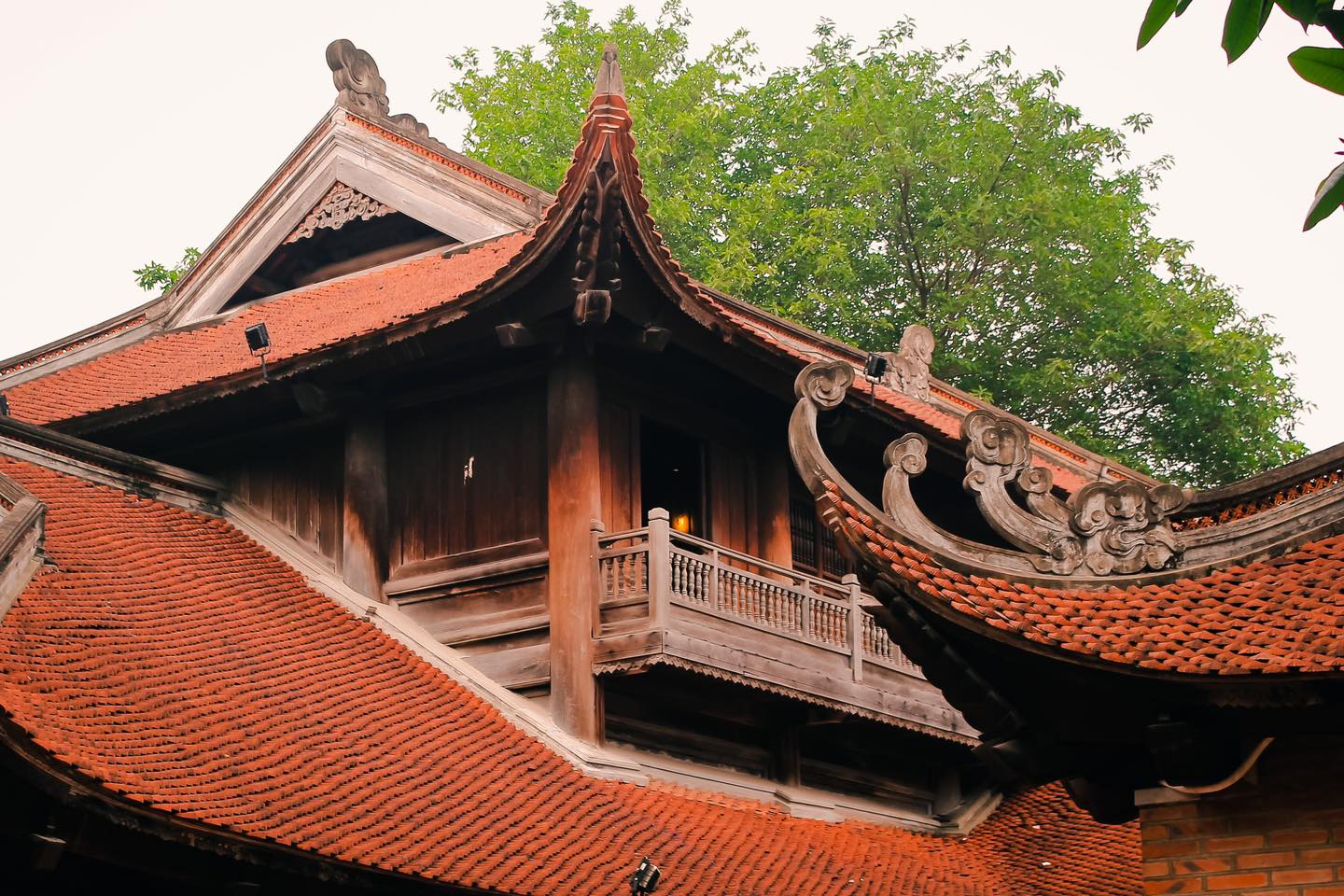
The Dai Bai Duong (Great House of Ceremonies) is the main building where major ceremonies take place.
The upper floor is reserved for altars honoring the three monarchs who played key roles in founding and supporting the academy. This space brings Vietnam’s educational legacy full circle, from past scholars to future aspirations.
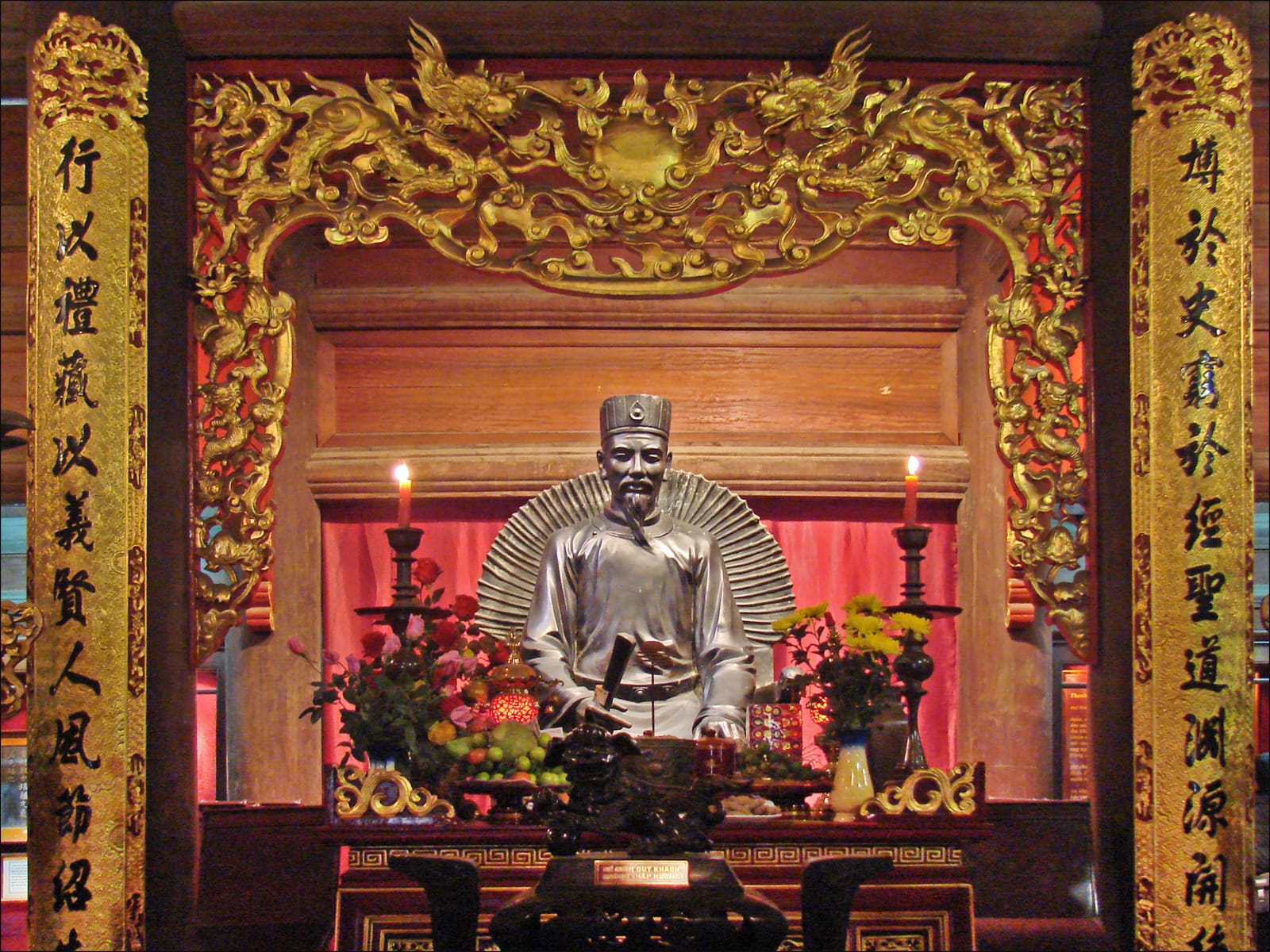
Great House of Ceremonies (Dai Bai Duong), located in the fourth courtyard. This is the most sacred center for both traditional ceremonies and major academic events
The Temple of Literature Hanoi is not a museum frozen in time; it remains a vibrant center for Vietnamese culture and tradition. Visitors should look out for opportunities to observe or participate in the following activities:
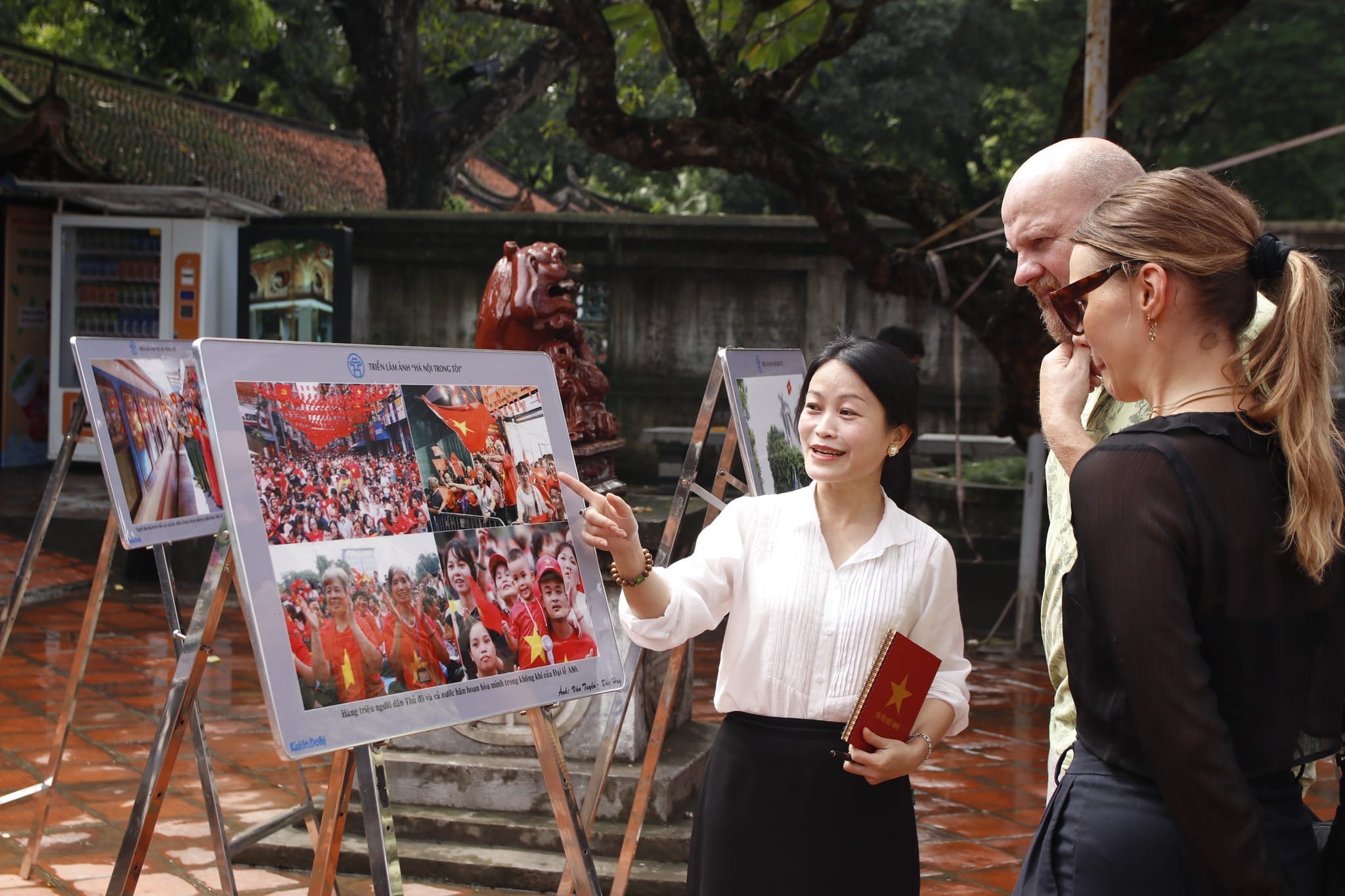
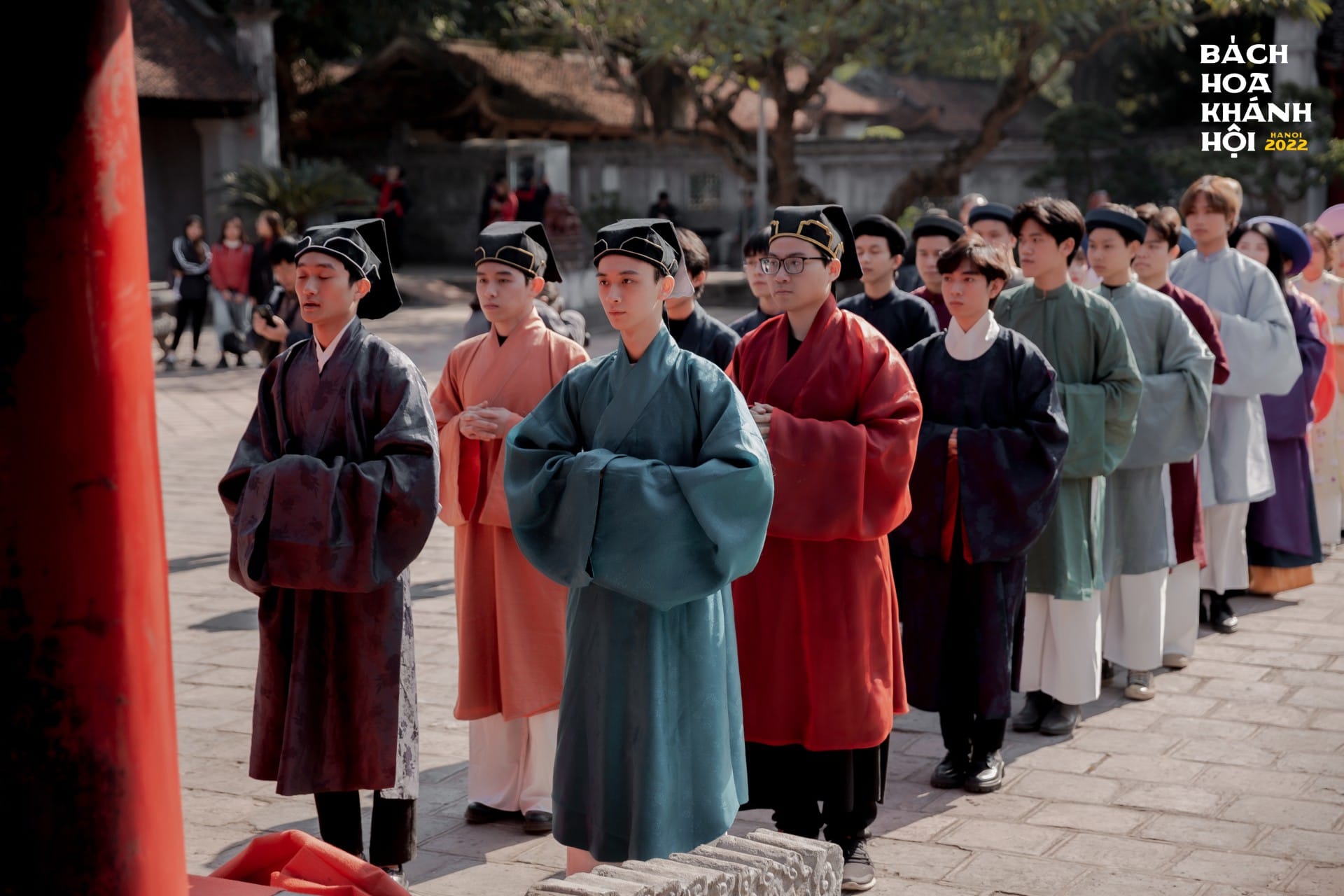
Observing traditional scholarly rituals and ceremonies honoring past teachers and sages.
During the Tết Lunar New Year holiday, the courtyards transform as calligraphers set up stalls to write lucky characters (Xin Chữ). Tourists can join the tradition of seeking a specially written character (such as Phúc – Happiness, or Lộc – Prosperity) from a professional scholar, bringing home a unique piece of Vietnamese culture.
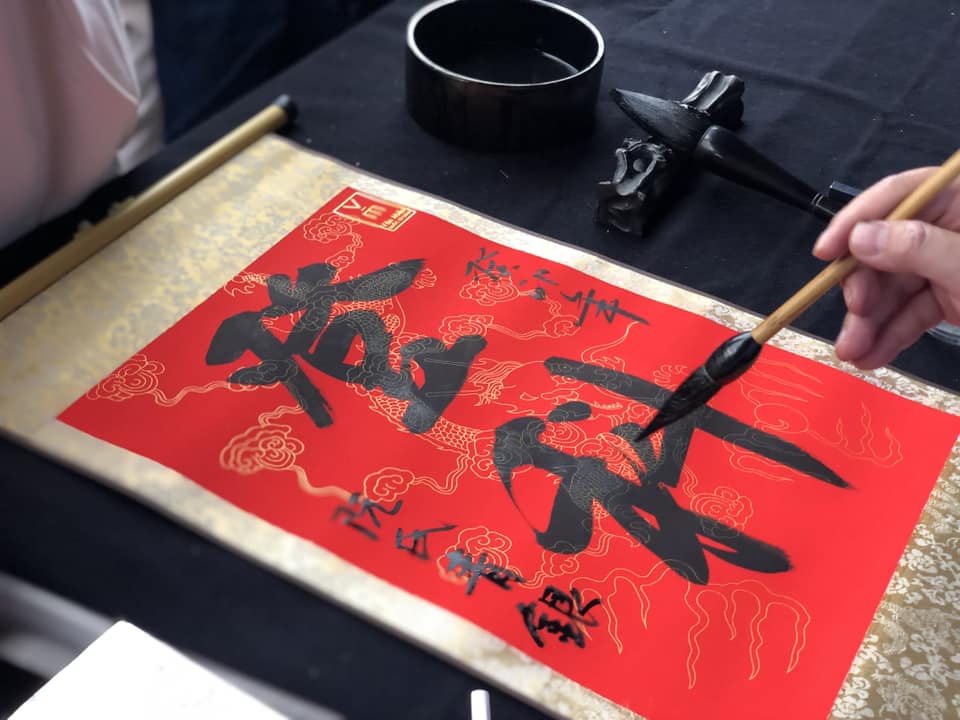
A scholar writing lucky calligraphy (Xin Chữ) during the vibrant Tết Lunar New Year celebrations at the temple.
Traditional rituals honoring Confucius (Tế Khổng Tử) and revered Vietnamese scholars, including Chu Văn An, still take place on major holidays.
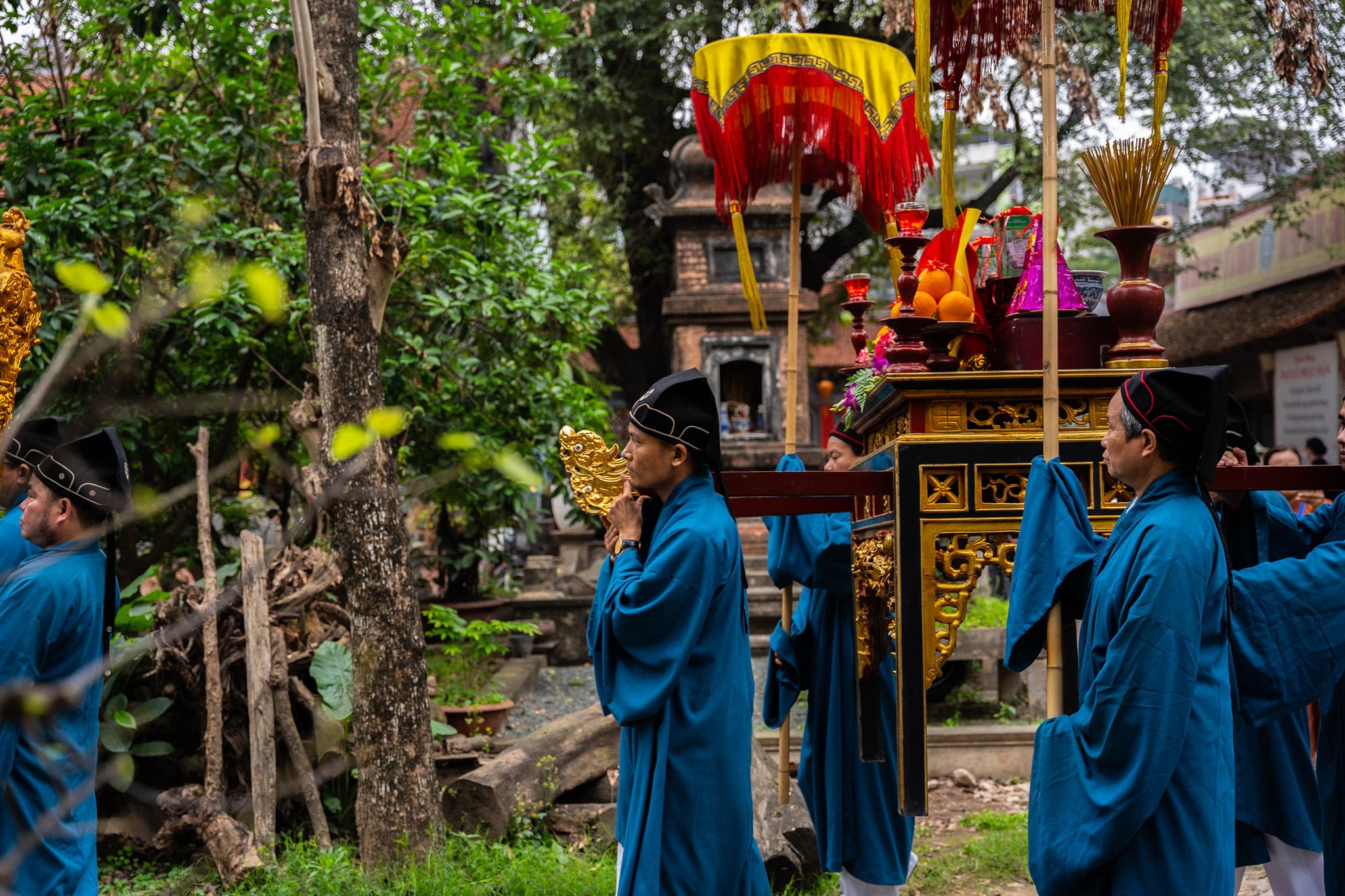
Observing traditional scholarly rituals and ceremonies honoring past teachers and sages.
Observing these ceremonies offers a genuine look into the enduring reverence for education and former teachers.
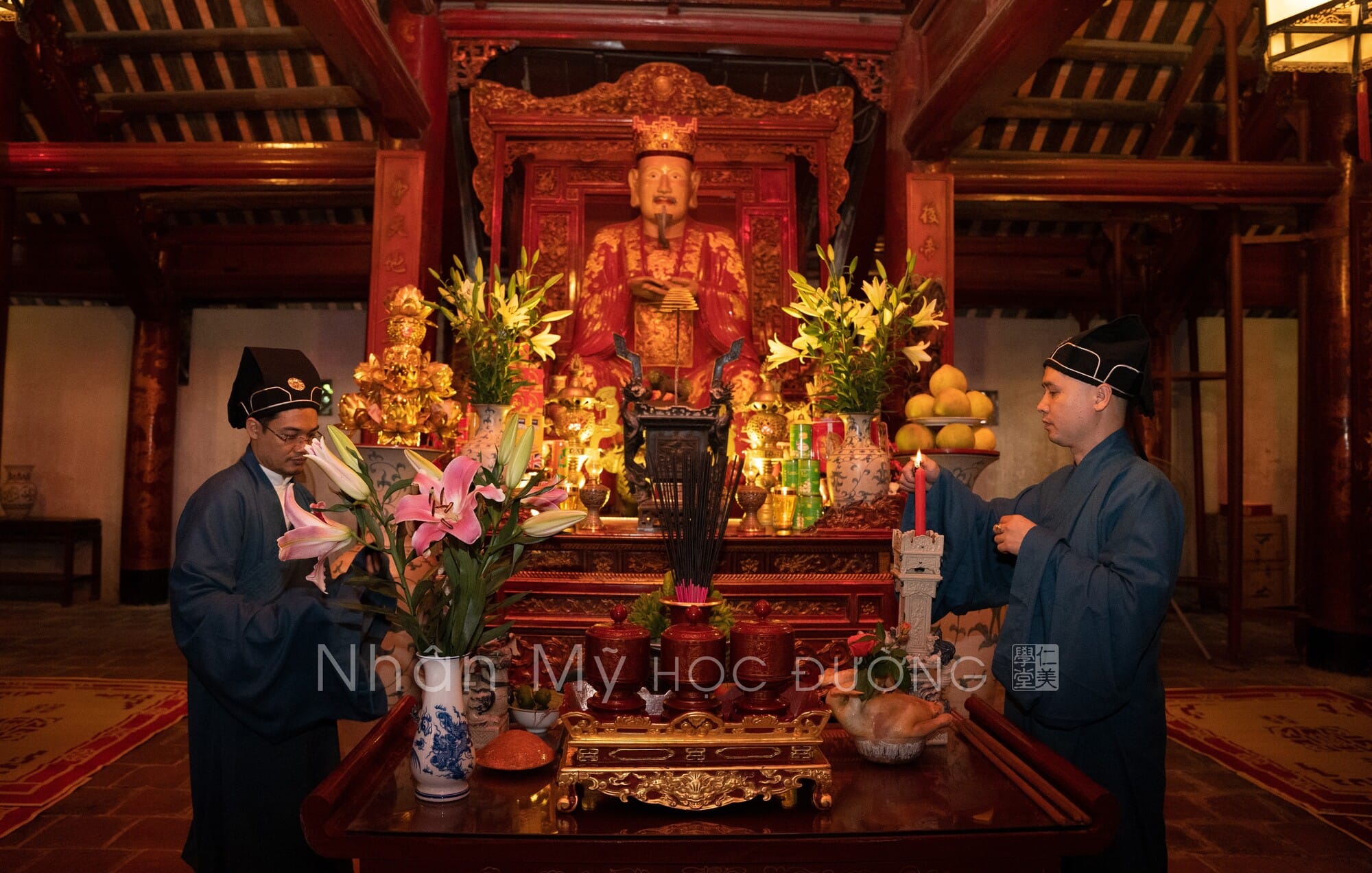
The Grand Ceremony for Confucius Connects Past and Present In Hanoi
Student Visits & Graduation: Throughout the year, especially during the graduation season (typically May to June), the complex is flooded with graduating students. The sight of young people in their formal academic regalia or colorful traditional áo dài posing against the ancient architecture provides a vibrant, unforgettable cultural moment celebrating contemporary academic success.
The Văn Hồ area, with its picturesque setting, is frequently utilized for traditional music, arts, and cultural performances, particularly during major festivals or events, emphasizing the link between literature, art, and scholarship.
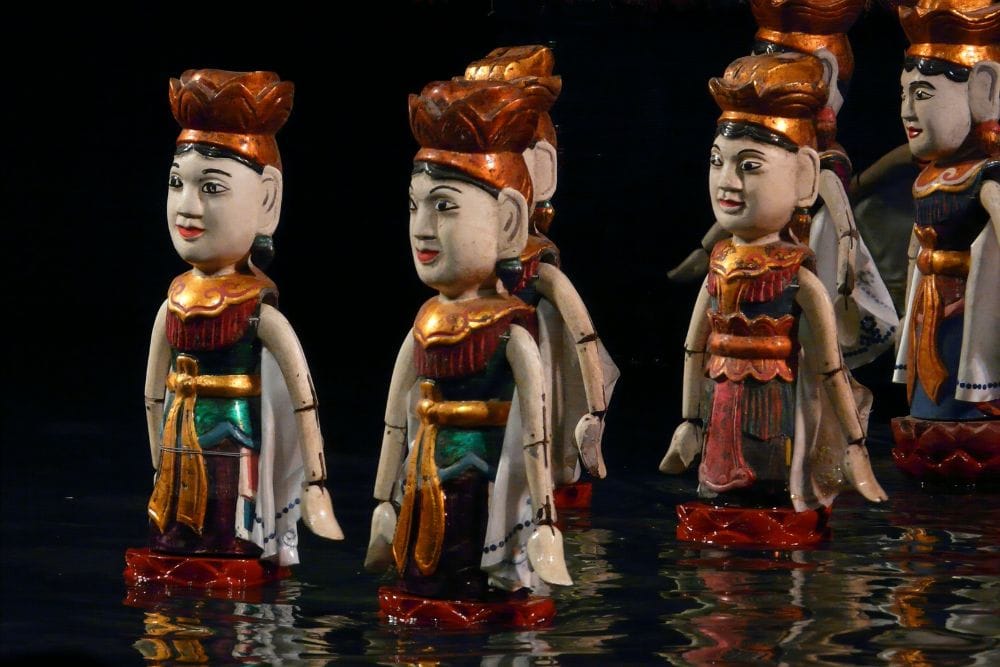
The Văn Hồ area, with its picturesque setting, is frequently utilized for traditional music & folks performance
Beyond the grand architecture and spiritual sites, the Temple of Literature Hanoi serves as a vital museum space, offering rotating and permanent exhibitions that deepen the visitor’s understanding of Vietnamese scholarship. These dynamic displays transform the temple from a historical ruin into a comprehensive learning center.
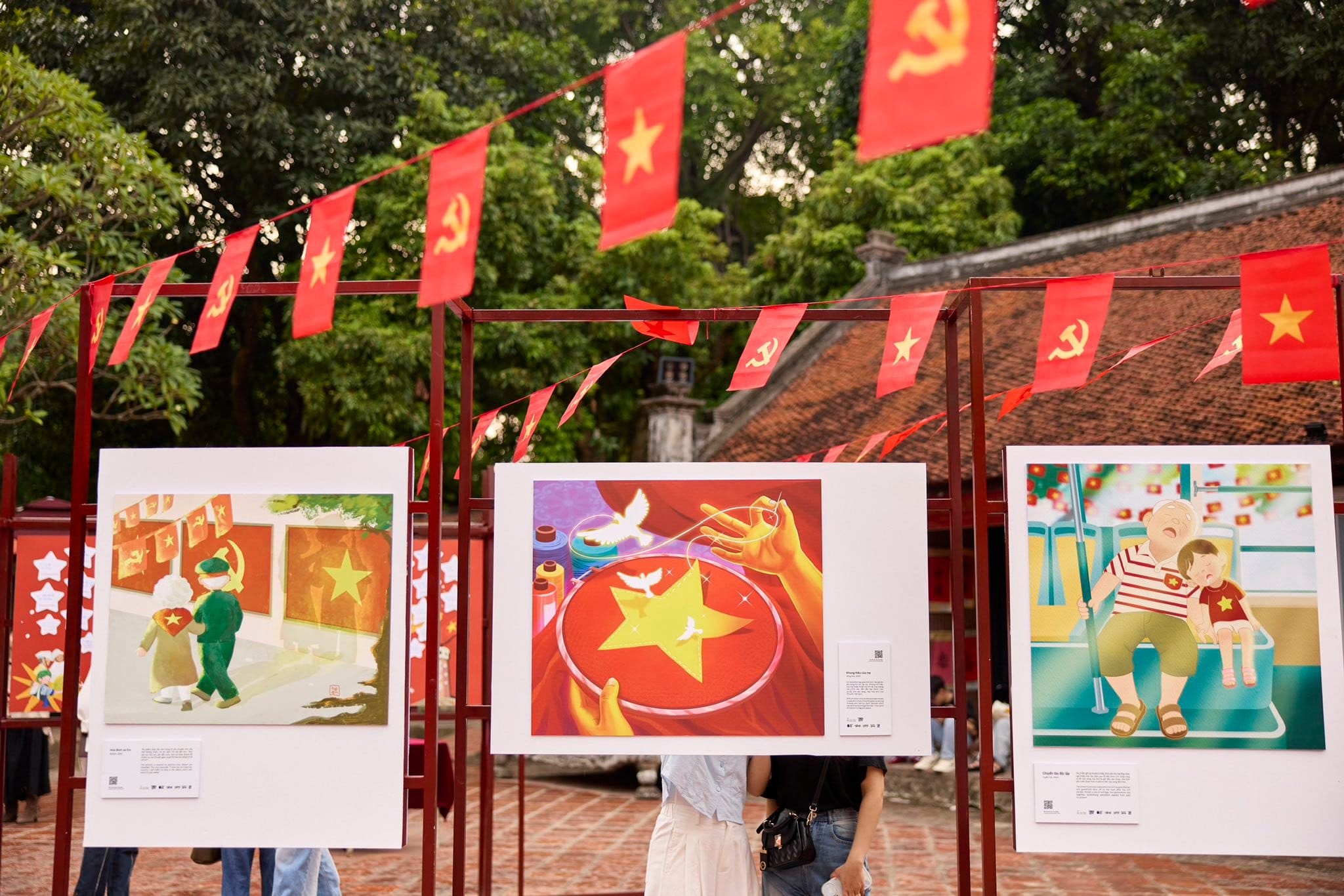
A display of historical artifacts and documents detailing Vietnam’s culture
These dynamic exhibits are essential for understanding the societal value placed on education, offering vital context to the famous stone stelae and confirming the temple of literature hanoi as a living repository of the nation’s scholarly past.
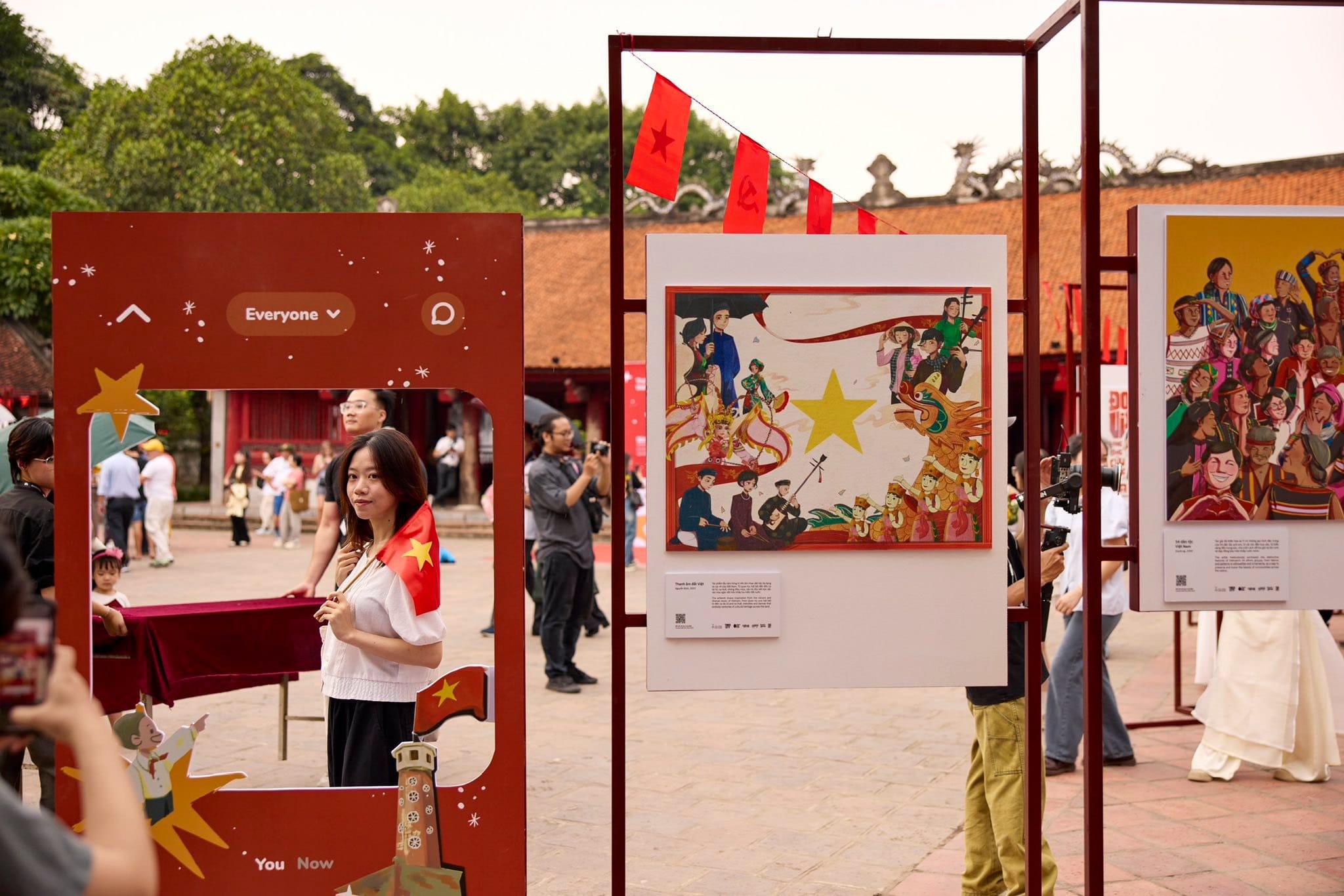
Exploring the rotating exhibitions, which bring the history of the Imperial Academy to life for modern visitors.
If you plan to visit during a major festival, the temple’s activities become even more vibrant. For a complete understanding of Vietnam’s holiday spirit and traditional celebrations, read our guide on the Public Holiday in Vietnam.
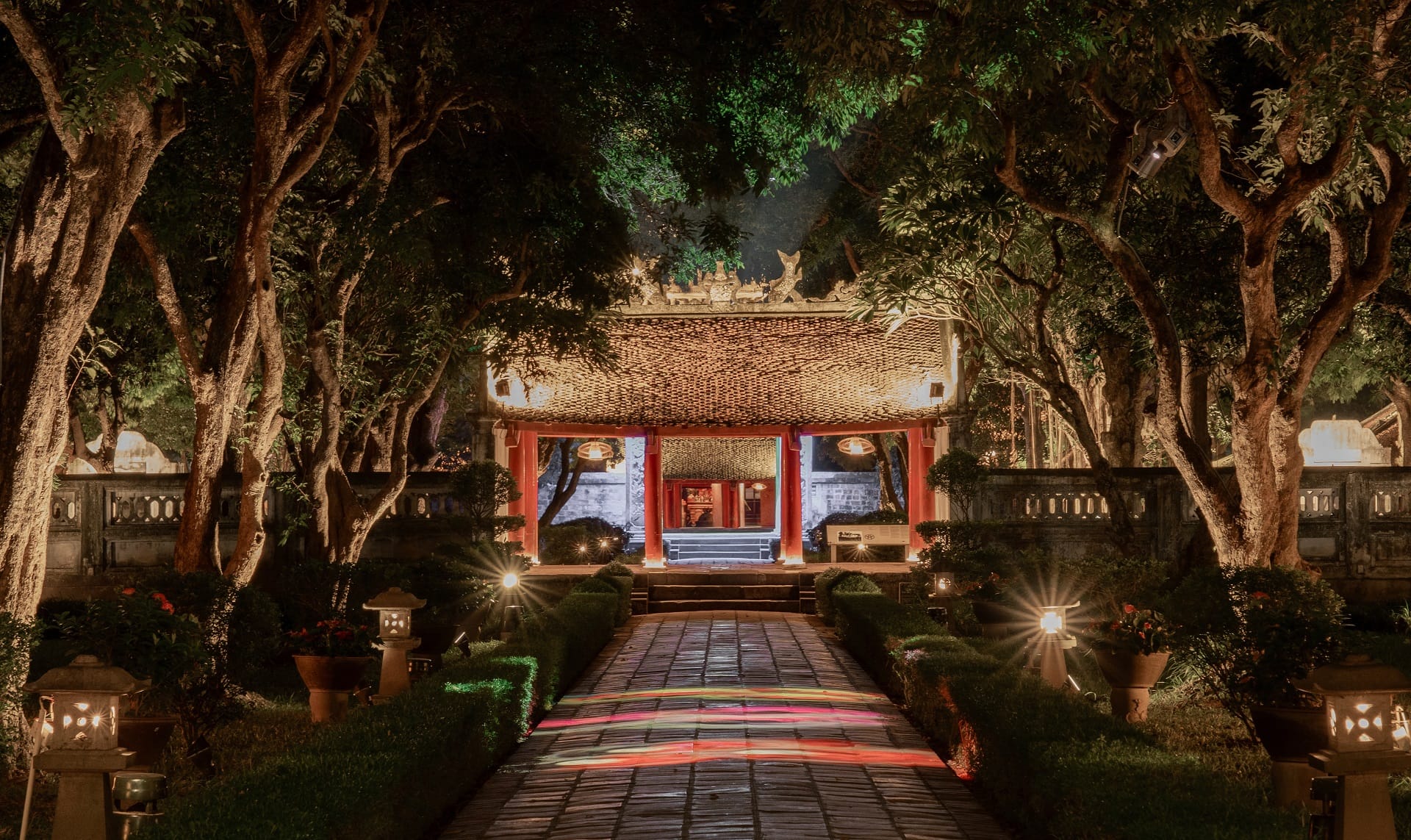
The historical structures illuminated by light art during the captivating Temple of Literature Hanoi night tour.
The experience of the Temple of Literature Hanoi transforms completely after sunset with its increasingly popular night tour. This evening journey offers visitors a space that is both familiar and utterly new, brought to life through impressive light art and a subtle, sophisticated sound system. The night tour guides guests through various emotions and intellectual stages, reflecting the arduous but rewarding path of the ancient scholar.
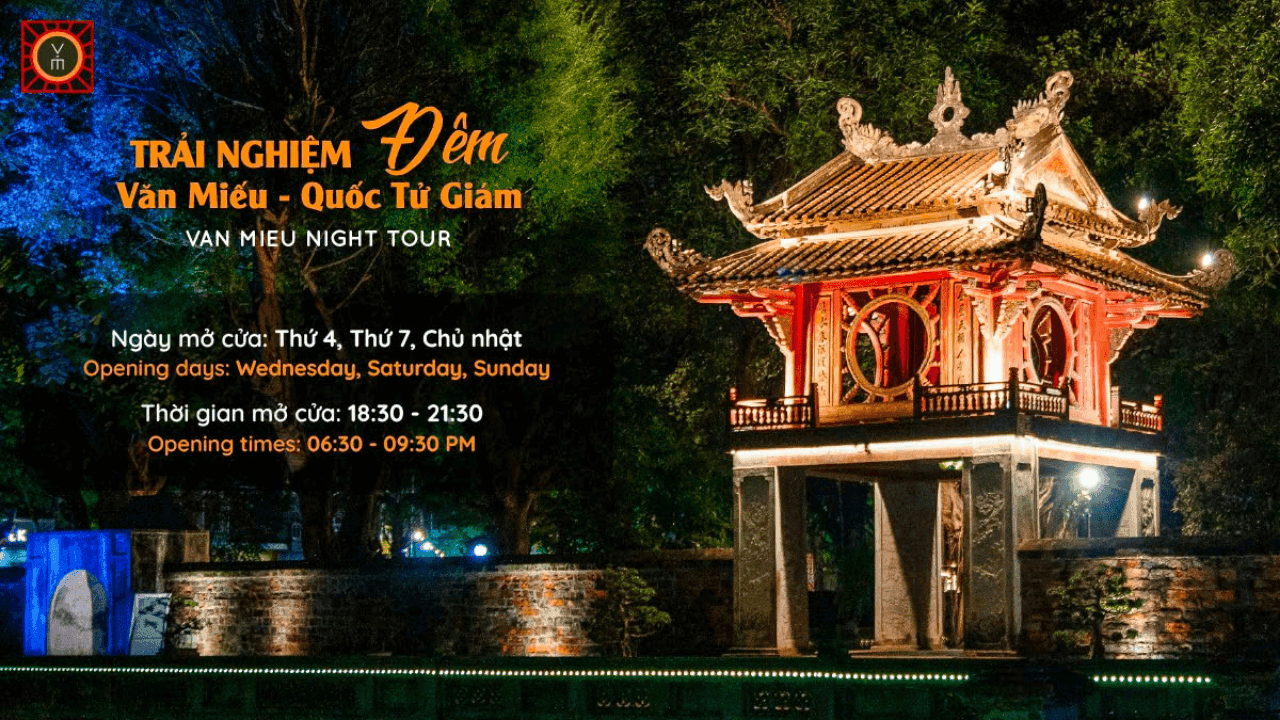
The impressive 3D Mapping Show, “The Essence of Scholarly Tradition” (Tinh Hoa Đạo Học), projected onto the temple walls.
You can participate in diverse activities designed to bring you closer to the “Story of Study and Success” (Học để thành nhân, học để thành tài), such as learning calligraphy with a master, playing traditional folk games, and listening to the stories “told by the stone stelae.” The climax of this immersive process is the stunning 3D Mapping Show, “The Essence of Scholarly Tradition” (Tinh Hoa Đạo Học).
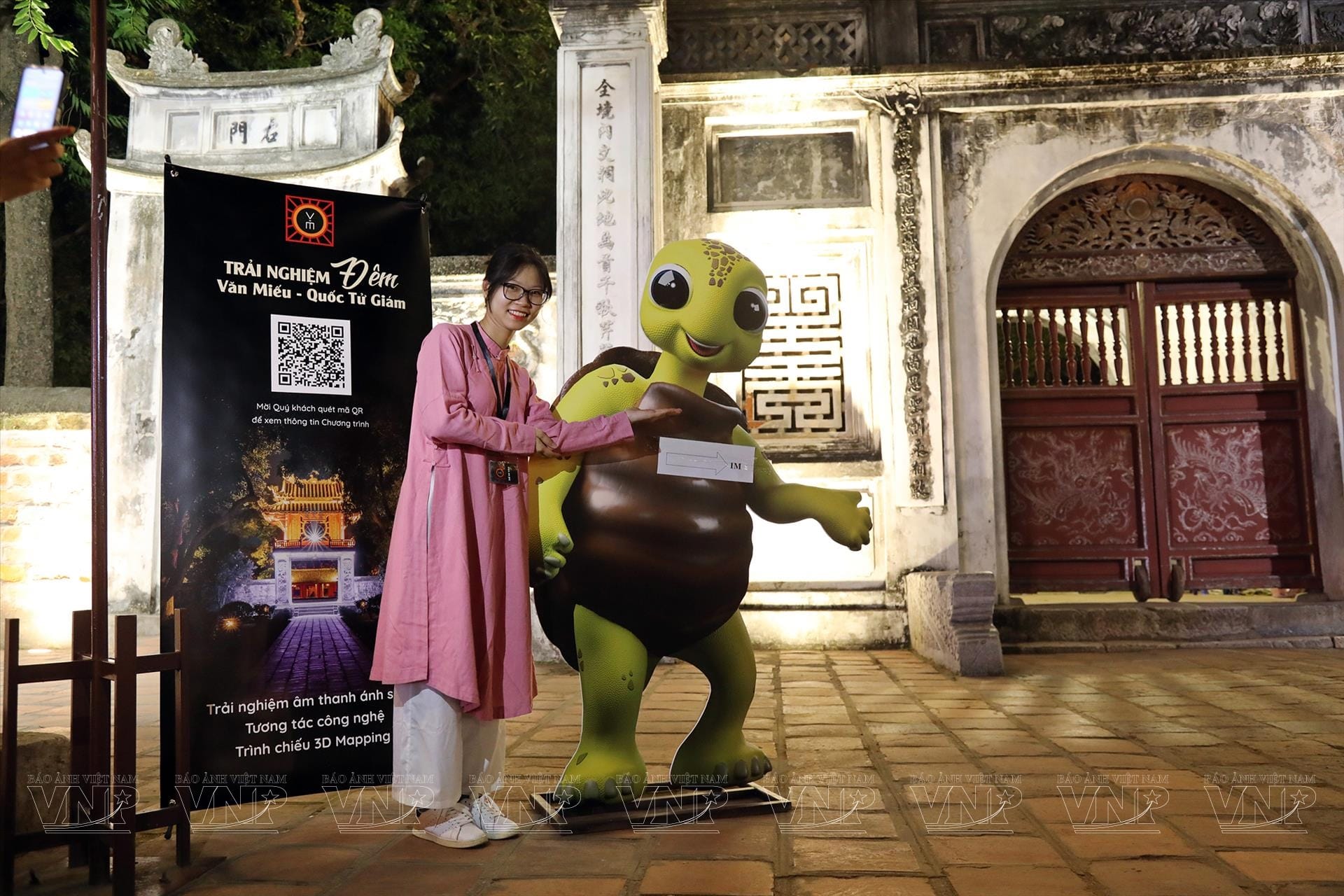
Experiencing the immersive atmosphere of the night tour, guided by subtle lighting and sound design.
Projected onto the historical structures, this spectacular show celebrates the Vietnamese tradition of deep reverence for education, respect for teachers (tôn sư trọng đạo), and the nation’s historical value system of employing talented individuals. It is a powerful, modern presentation that offers a magnificent close to your exploration of the Temple of Literature Hanoi.
For the most current information regarding opening hours, exhibition schedules, and ticket purchasing options (including the special night tours), please visit the official website of the Center for Cultural and Scientific Activities of Van Mieu – Quoc Tu Giam
Here’s everything you need to know to make the most of your time at this historic site.
The Temple of Literature is open daily from 8:00 AM to 5:00 PM.
Adults: 70,000 VND
Students: 35,000 VND (student cards required)
Conveniently located near Nguyen Thai Hoc, Ton Duc Thang, Van Mieu, and Quoc Tu Giam streets, the temple is easily accessible from anywhere in Hanoi. You can drive yourself using Google Maps or book a ride through local apps like Grab or Gojek.
For public transport, take bus numbers 2, 4, 23, 25, or 38, each stops near the entrance. If you’re arriving by motorbike, there’s a designated parking area to the left of the main gate, with a small fee of 10,000-20,000 VND per trip.
To preserve the respectful atmosphere of the Temple of Literature Hanoi, visitors are kindly asked to follow a few simple guidelines. Dress modestly, avoid shorts, sleeveless tops, or revealing clothing, as this is a sacred site. Keep noise to a minimum, especially around worship areas, to maintain a peaceful environment for all. Lastly, be sure to bring cash, as credit cards may not be accepted at the entrance or nearby vendors.
Remembering to dress modestly (covering knees and shoulders) when visiting the sacred historical altars.
With its rich heritage and timeless beauty, the Temple of Literature Hanoi is considered the most important historical and cultural complex in Hanoi, and one of Vietnam’s 23 special national relics, remaining a must-see for any traveler exploring the capital of Vietnam.
The Temple of Literature Hanoi is far more than a collection of historic buildings; it is the spiritual and intellectual heart of Vietnamese heritage. By exploring its unique architecture and decoding its symbols—from the Khuê Văn Các’s shining light to the Stone Turtles’ enduring wisdom—you gain a piece of the puzzle that defines the Vietnamese identity.
Take the time to discover these cultural easter eggs and leave with a profound appreciation for Vietnam’s tradition of scholarship.
Visit the Temple of Literature Hanoi and find your own connection to this extraordinary legacy of learning.
Immerse yourself in a stay where northern Vietnamese architecture meets world-class comfort. At Jiva Hoalu Retreat, each accommodation blends locally inspired décor with modern luxuries, offering a unique fusion of culture, tradition, and elegance. Whether you’re here for a romantic getaway, a family escape, or a tranquil retreat, Jiva promises unforgettable moments in the heart of Ninh Binh.
Contact Us:
📞 +84 933 006 886
📧 inquiry@jivahoaluretreat.com
🌐 https://demo.jivahoaluretreat.com/
Book now! to enjoy super hot deals
Thank you for your reservation.
You will receive a confirmation from us momentarily
Thank you for reaching out. Your request has been received. Our team will respond within 24 hours.